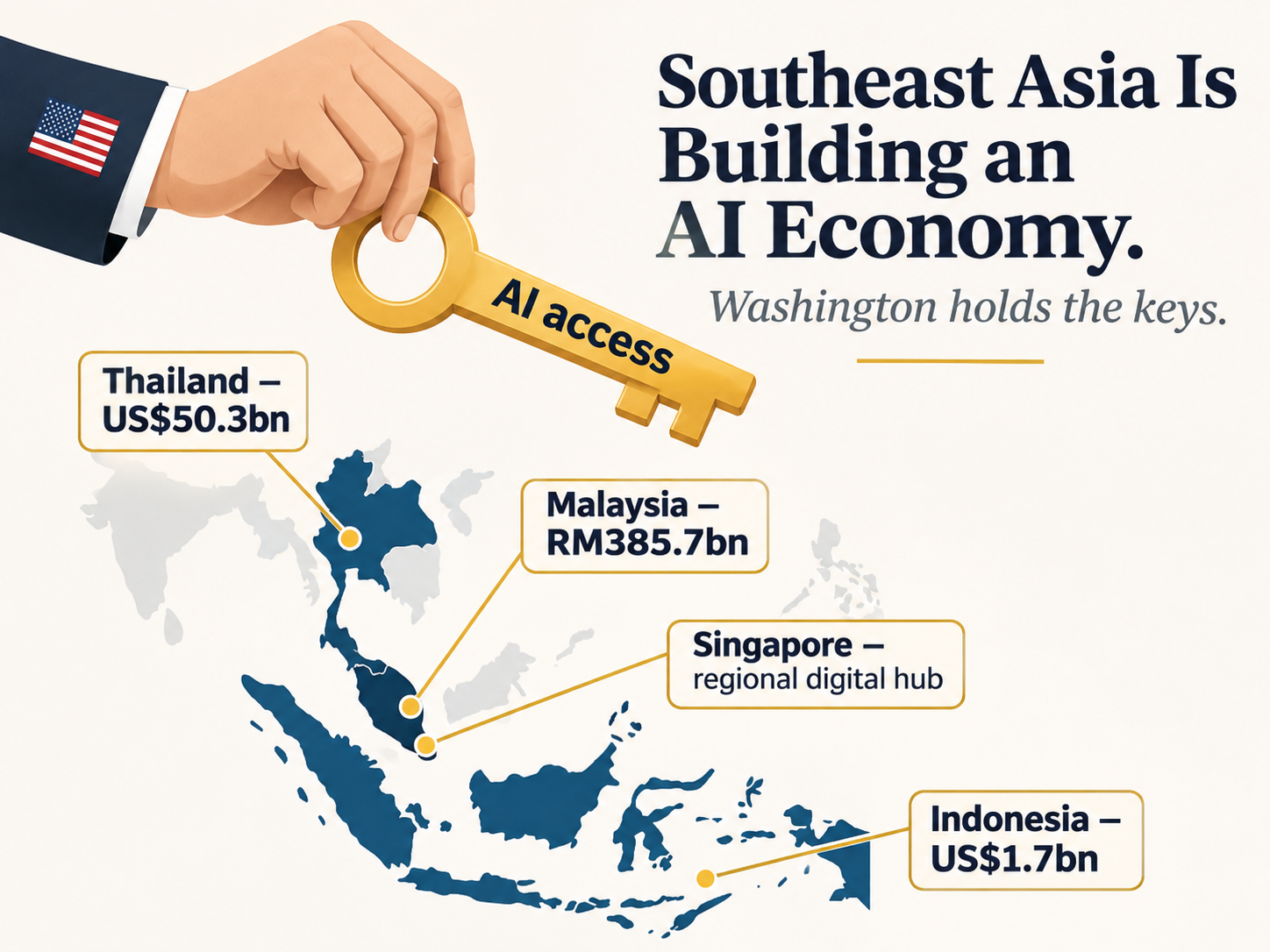
Southeast Asia is investing billions in its AI and digital infrastructure. But new US semiconductor export controls expose a strategic vulnerability: who ultimately controls access to the technology on which the region’s economic ambitions depend?
Society & Culture

In ageing South Korea, AI-powered companion dolls are bringing comfort and companionship to older people living alone. But as technology enters one of the most intimate areas of human life, a deeper question emerges: what does it truly mean to grow old with dignity?
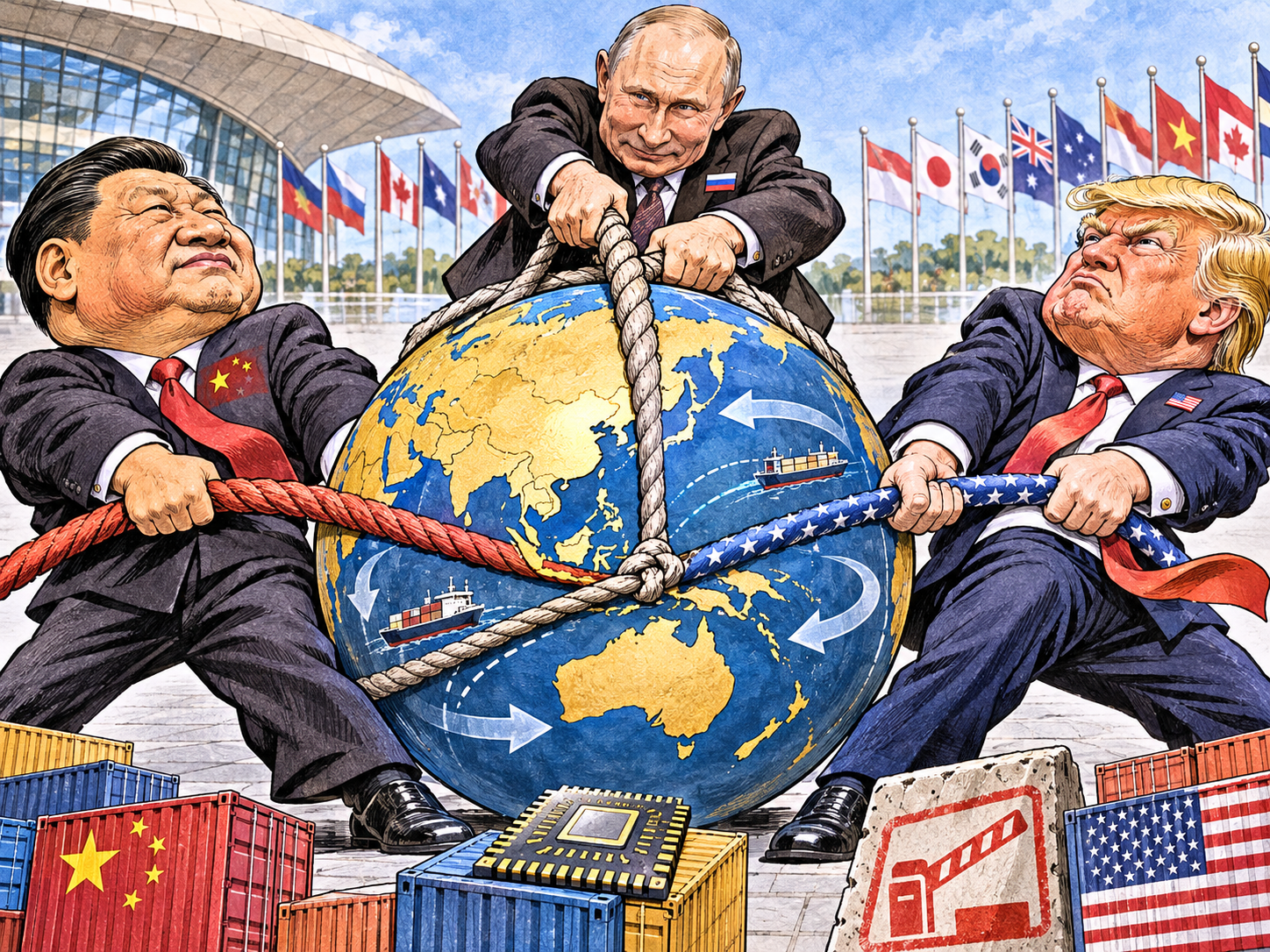
As world leaders gather in Shenzhen, the struggle for control over technology, trade and critical resources exposes a fundamental contradiction. Asia-Pacific economies depend on integration, yet Washington and Beijing increasingly determine the conditions under which others can participate. Can regional cooperation survive the politics of economic power?

As Singapore and Malaysia expand their AI cloud capacity, the Megaspeed investigation puts cross-border GPU rental under scrutiny. When computing time is resold, who verifies the end user and who bears the loss if access is suspended?

Singapore’s plan to import up to 1.3 GW of electricity via a corridor linking Vietnam, Malaysia and Singapore puts the ASEAN Power Grid to a commercial test. Who will sign long-term contracts for power expected from 2035, who will carry the risk of delays and shortfalls, and can other buyers eventually use the same connection?
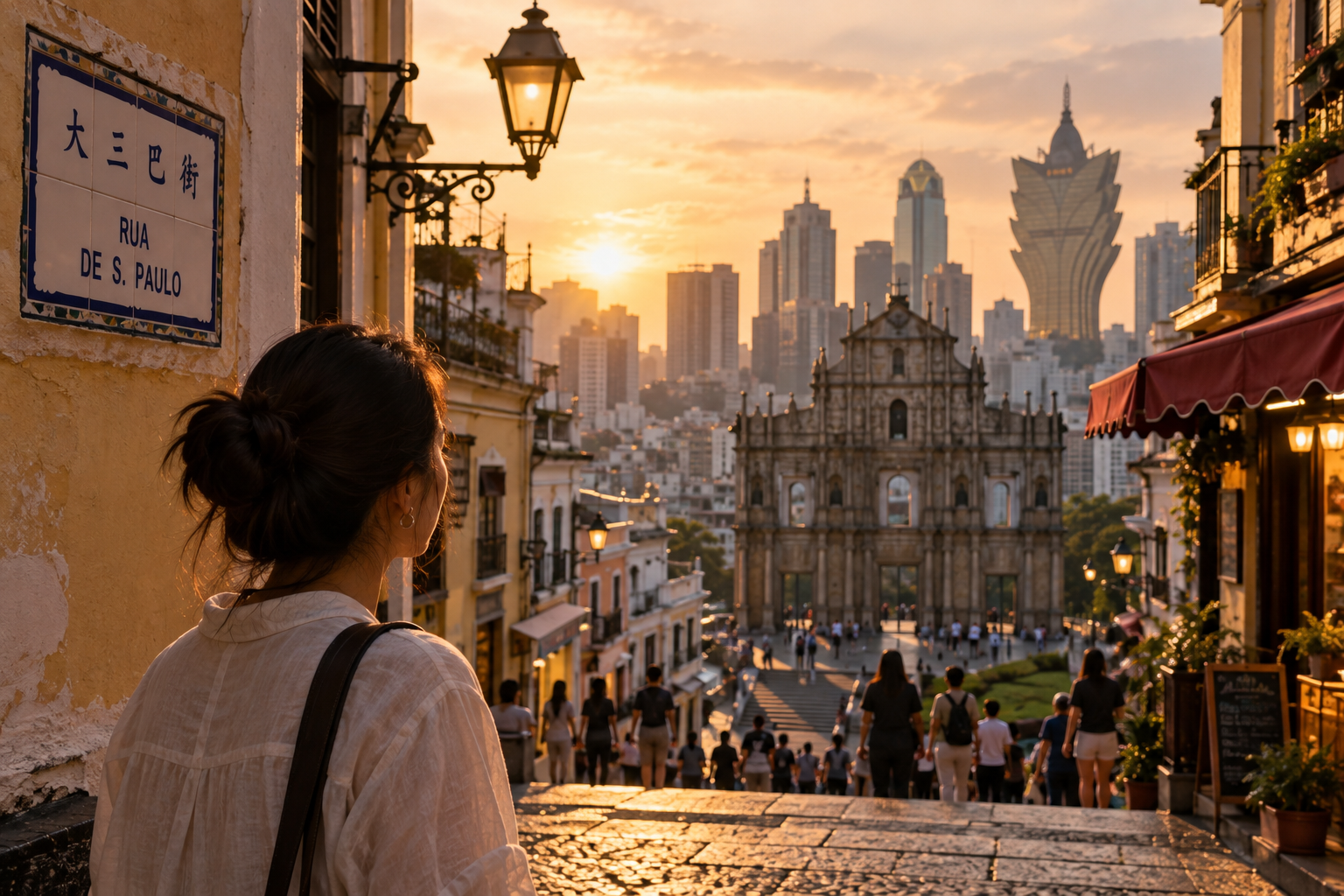
Macau is far more than a casino economy. Centuries of encounter between Chinese society and Portuguese institutions created a distinctive culture whose architecture, food, language and traditions still shape this small territory at the edge of southern China.
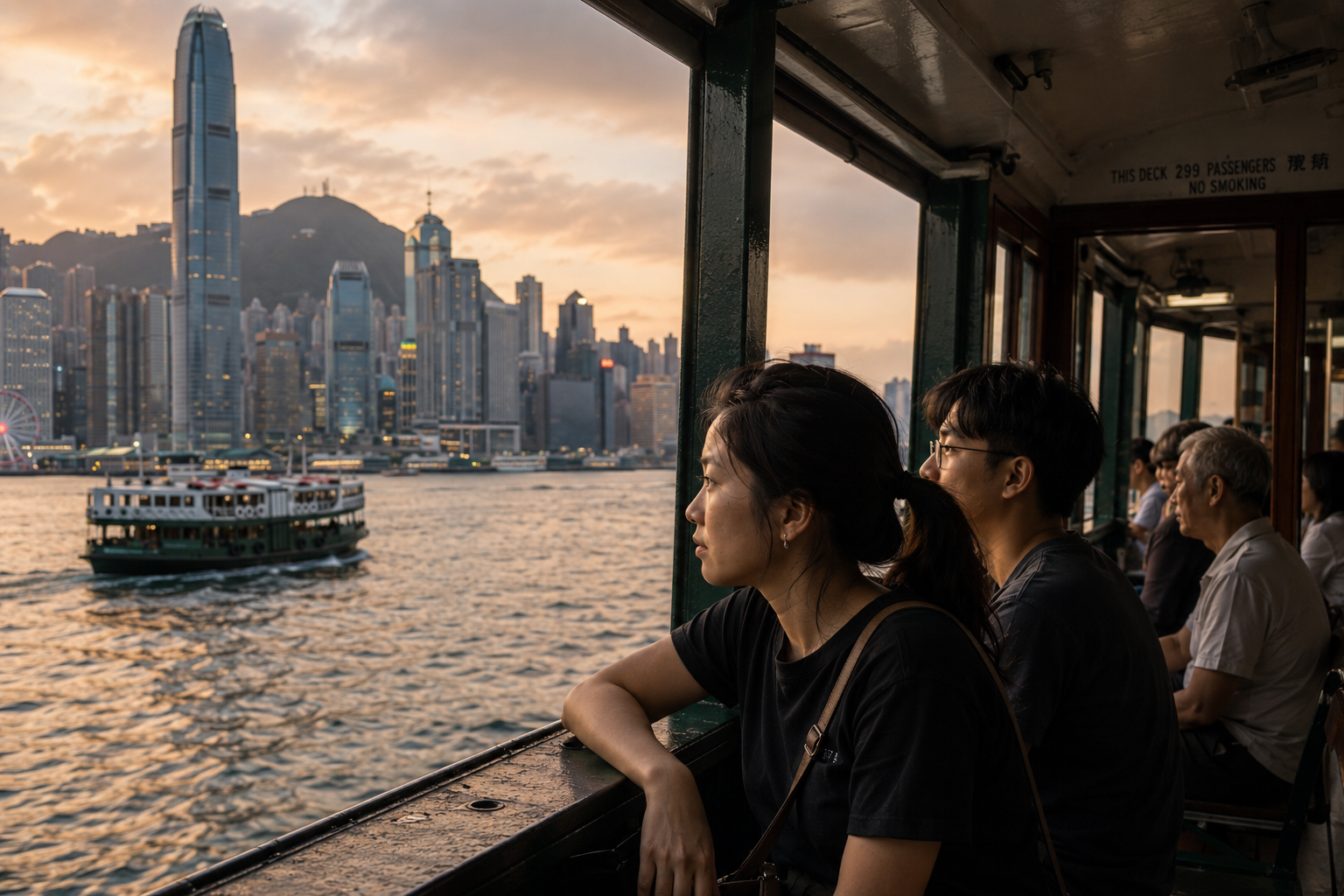
Hong Kong was built through movement and connection. Migration, Cantonese culture, colonial institutions, manufacturing, finance and extraordinary urban density created a society between worlds—one whose future now depends on redefining what it connects.

A new generation of Cambodian designers, dancers and artists is rediscovering Khmer culture — transforming ancient symbols, traditional performance and inherited craft into fashion, digital art and contemporary forms of expression.
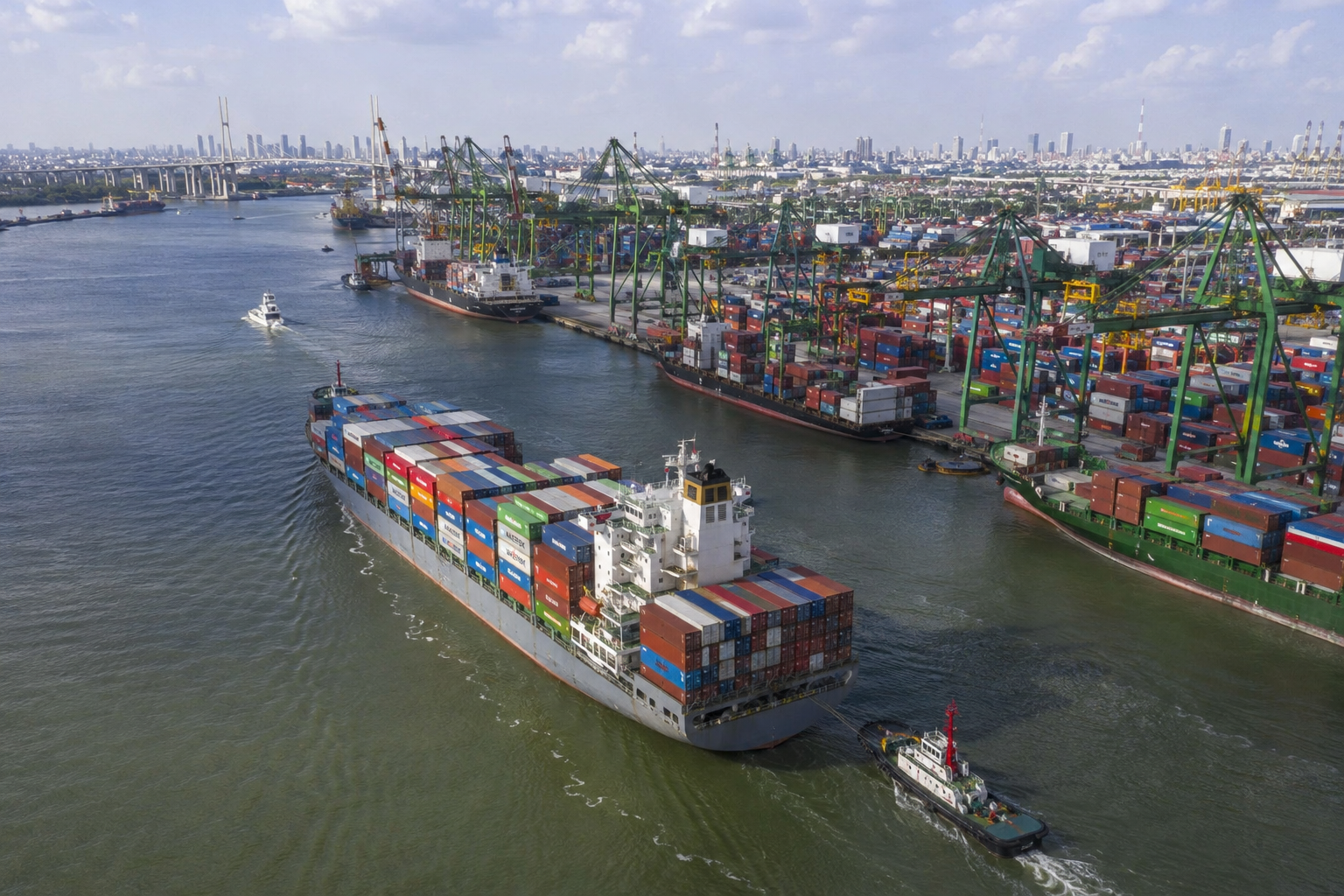
Asia does not feed the world through sheer agricultural volume alone. Its real power lies in concentrated food flows — from rice and palm oil to aquaculture, coffee and spices — that global markets cannot easily replace.
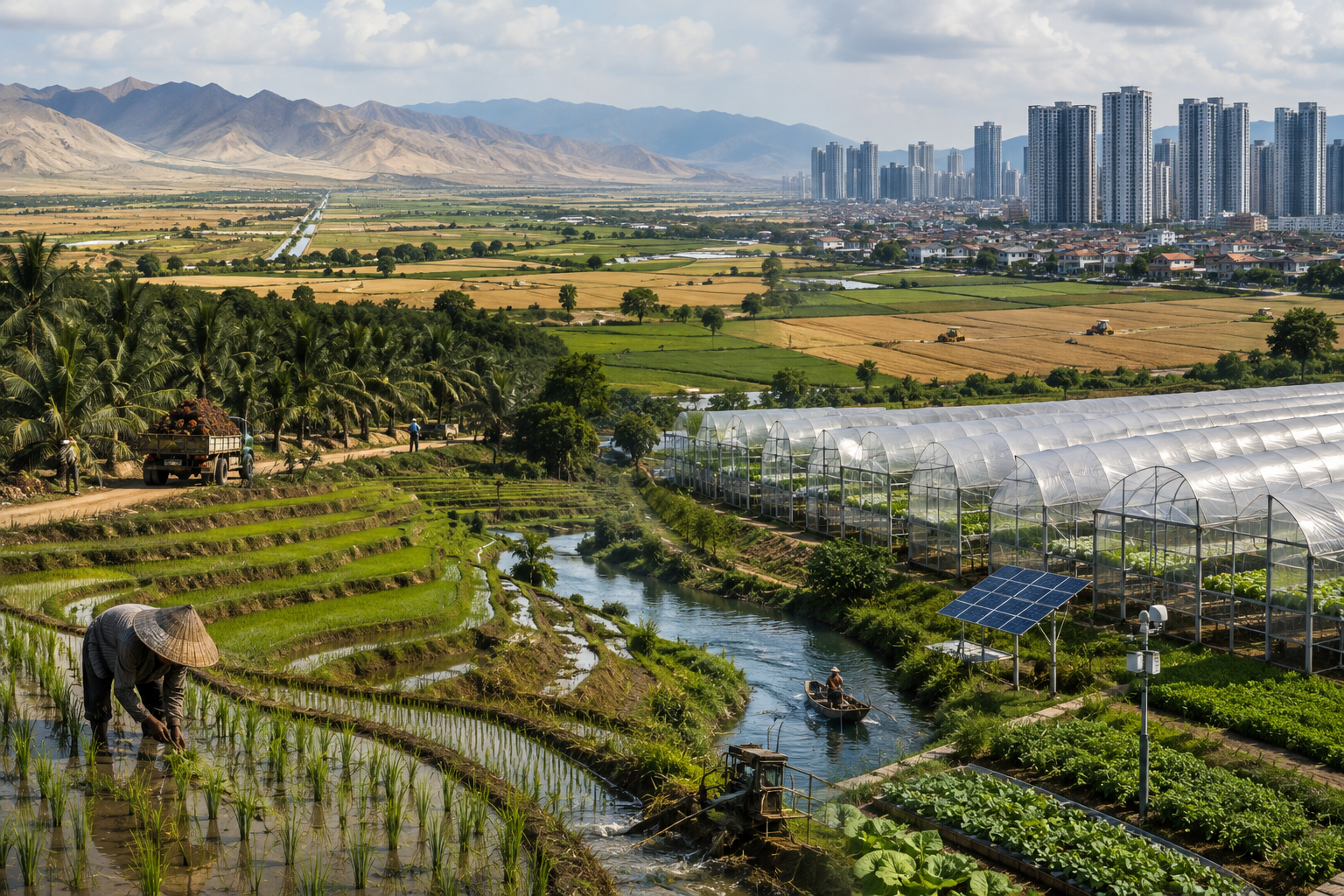
Beyond Asia’s megacities lies an immense agricultural landscape shaped by rice terraces, grain fields, plantations, irrigation and increasingly engineered farming. Understanding this geography reveals the physical system beneath Asia’s extraordinary economic and technological transformation.

Taiwan is more than semiconductors and geopolitics. Shaped by migration, colonial history, democratisation and technological ambition, the island has developed a distinctive society whose identity continues to evolve through the many historical layers it carries.

In Kuala Lumpur, shopping malls have evolved beyond retail. Shaped by climate, mobility and urban density, they increasingly function as places where people meet, work and spend time—raising a broader question about how cities organise public life in the twenty-first century.
