What Does Asia Feed the World?
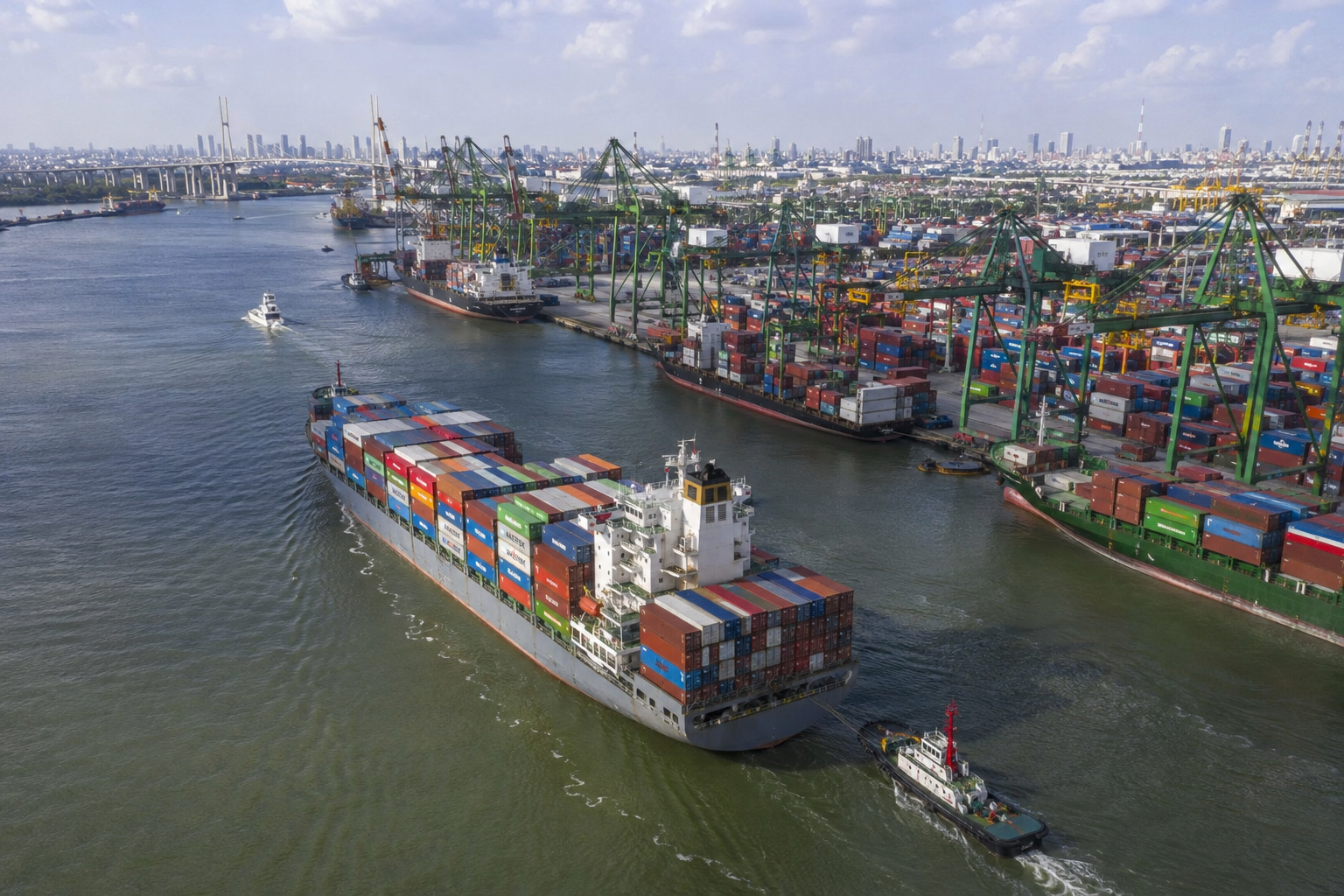
Why Asia’s agricultural power lies not simply in how much it grows, but in the food flows the global economy struggles to replace
Surface — Asia produces food on an extraordinary scale. But its real global importance becomes visible only when we follow what leaves its farms, ponds, plantations and processing centres.
Walk through a supermarket almost anywhere in the world and Asia is present in ways that are easy to overlook.
The rice may come from India, Thailand or Viet Nam. Frozen shrimp may have been raised in an Asian aquaculture pond. Palm oil from Indonesia or Malaysia may be inside biscuits, instant noodles or margarine. Tea may have grown in China, India or Sri Lanka, while coffee, pepper and spices connect consumers elsewhere to farms across South and Southeast Asia. And that is only what remains recognisable.
Asia does not feed the world through one harvest. It feeds it through concentrations of dependence.
Further inside the food system are oils, starches, extracts, sauces, feed ingredients and processed foods whose geographical origins disappear long before they reach the consumer. This is where the agricultural geography of Asia becomes something larger. It becomes infrastructure.
Asia Eats First
There is an important misconception to remove before asking what Asia feeds the world. Most Asian agriculture does not feed the world. It feeds Asia.
That distinction matters because the region contains more than half of humanity and some of the world’s largest domestic food markets. China and India alone absorb enormous quantities of cereals, vegetables, meat, fish and fruit before international trade even begins.
Tropical fruit illustrates the principle particularly well. The FAO estimates that 99 percent of tropical-fruit production originates in developing countries, predominantly in Asia and Latin America. Yet the combined exports of the four major internationally traded tropical fruits represent only around 5 percent of total production. Most of what is harvested is consumed or otherwise used within producing countries themselves.
Asia therefore cannot simply be understood as an agricultural export platform. It is an immense internal food system from which particular surpluses emerge onto global markets. And those surpluses can be far more fragile than headline production numbers suggest.
Imagine a country consuming 90 percent of a crop domestically and exporting the remaining 10 percent. If production falls by 5 percent and domestic consumption is protected, exports do not necessarily fall by 5 percent. They can fall by half. That is the arithmetic of the residual surplus.
For importing countries, this distinction is crucial. What matters is not simply how much food an Asian country produces, but how much remains available after its own population, industries and strategic priorities have been served.
Rice: When a Staple Becomes Strategic
No crop represents this tension more clearly than rice. Across much of South, Southeast and East Asia, rice is not merely a commodity. It is part of everyday life, rural employment, national food security and political stability. Yet the surplus leaving this enormous domestic system supports consumers far beyond the region.
Food security is not the same as self-sufficiency. Increasingly, it is the management of dependencies.
India illustrates the scale. The FAO currently forecasts Indian rice exports at 23.6 million tonnes in calendar year 2026, an all-time high. Viet Nam is forecast to export another 7.9 million tonnes. The significance of those numbers lies not simply in their volume. It lies in the concentration of international supply.
Countries across Africa, the Middle East and parts of Asia depend on a rice market in which harvest conditions and policy decisions in a relatively small number of Asian exporting countries can rapidly affect availability elsewhere. That creates a structural asymmetry.
For an importing country, rice arriving from abroad is part of domestic food security. For an exporting country, however, exports remain the residual layer after domestic food security has been considered. When the two interests collide, the exporting government has every incentive to protect its own population first.
Food therefore behaves differently from many industrial commodities. A semiconductor producer normally has strong incentives to keep selling into world markets. A government confronted with food inflation, shortages or public anxiety may decide that restricting agricultural exports is politically more important than maximising them.
The more concentrated the export market, the more consequential that decision becomes.
Palm Oil: When Food Becomes Energy Policy
Rice is visible on the plate. Palm oil often is not. Yet few agricultural products demonstrate Asian concentration more powerfully. Indonesia and Malaysia overwhelmingly dominate global palm-oil production, with Indonesia alone forecast to produce around 48 million tonnes in 2026/27 and Malaysia close to 20 million tonnes.
Palm oil then disappears into supply chains. It enters cooking oil, bakery products, confectionery, instant foods and countless processed products. Beyond food, it is also used in cosmetics, chemicals and energy. That makes the palm-oil economy unusually revealing because the same agricultural resource can serve several competing systems.
Indonesia has pushed this logic much further. The country introduced a nationwide B40 biodiesel mandate in 2025, requiring diesel to contain 40 percent biodiesel, primarily derived from palm oil. In July 2026, the government moved to B50, raising that blend to 50 percent. Indonesia’s Ministry of Energy explicitly presents the programme as a tool for reducing diesel imports, saving foreign exchange and strengthening national energy security. This changes the strategic meaning of a plantation.
Palm oil is no longer competing only between Indonesian consumers and foreign buyers. The world market is increasingly competing with Jakarta’s national energy strategy. Food, industry and fuel now draw upon the same biological resource.
Agricultural power is not autonomy. It is position within a system.
For an importer, that means agricultural supply can tighten even without a failed harvest. A government may simply decide that using more of its crop domestically creates greater strategic value. Agriculture, in that sense, becomes part of energy sovereignty.
The Ocean Is Becoming a Farm
Another Asian food system receives far less geopolitical attention than rice or palm oil. Aquaculture. For centuries, feeding a growing population with fish largely meant catching more from oceans, rivers and lakes. That equation is changing as aquatic food production increasingly shifts towards managed biological systems. Asia sits at the centre of that transformation.
According to the FAO’s 2026 assessment, Asia accounted for 76 percent of global aquatic-animal and algae production in 2024, producing 179 million tonnes. Around 130 million tonnes came from aquaculture. China alone produced 57.6 million tonnes of farmed aquatic animals, while India, Indonesia, Viet Nam and Bangladesh were also major producers. This is not merely an Asian food story. It is part of the restructuring of global protein production.
Shrimp farms in India and Viet Nam, fish ponds in China, pangasius production around the Mekong Delta and aquaculture systems across Indonesia connect biological production with hatcheries, specialised feed, disease management, cold storage, processing facilities and international logistics.
Asia consequently supplied 34 percent of the global export value of aquatic animal products in 2024, with China leading the region, followed by Viet Nam, India, Thailand and Indonesia. The distinction between agriculture and the ocean is therefore becoming less useful. Both are increasingly managed production systems in which biology, technology, logistics and capital interact.
Asia Also Feeds the World’s Taste
Calories alone underestimate Asia’s influence. There is another agricultural layer that may be smaller in physical volume but enormous in cultural reach: taste.
Tea is perhaps the clearest example. China is by far the largest tea producer globally, followed by India, while Sri Lanka remains deeply connected to international tea markets. Across the main producing countries, millions of smallholders remain tied to the crop and the trade surrounding it.
Then there are spices. India and Southeast Asia have shaped global cuisines for centuries through pepper, cardamom, turmeric and countless other products. These crops may occupy far less land than rice or wheat, but their value lies precisely in their specificity. Soil, climate, knowledge, processing and regional reputation are difficult to reproduce overnight somewhere else.
Coffee adds another layer. Viet Nam has become central to the global Robusta economy, while Indonesia is another major producer. When coffee prices surged in 2024, the FAO linked part of that pressure to difficult weather conditions in Viet Nam and Indonesia, where production and exports had fallen.
The episode revealed a broader principle. A consumer in Amsterdam, Paris or Chicago may never think about rainfall in Viet Nam when buying coffee. The market does.
From Farm to Food Industry
The deeper transformation, however, is happening between the farm and the supermarket. Asian countries increasingly do more than export agricultural commodities. They process them.
Rice becomes noodles, flour and snacks. Fish becomes fillets, frozen meals and canned products. Fruit becomes concentrates, juices and dried ingredients. Vegetable oils enter large food-manufacturing ecosystems before reaching consumers in forms that may no longer reveal where the original crop was grown. This shifts the source of competitiveness.
A successful food-export system depends not merely on fertile land or inexpensive labour, but on refrigeration, storage, ports, laboratories, food-safety standards, packaging, logistics, finance and industrial processing. In that respect, the architecture begins to resemble the manufacturing ecosystems that dominate discussions of Asian technological power.
A semiconductor cluster needs fabrication plants, equipment makers, chemical suppliers, engineers and logistics networks. A modern agrifood cluster needs farmers and hatcheries, but also irrigation systems, fertiliser supplies, cold chains, certification laboratories, processors, packaging companies and export infrastructure.
The product is different. The systemic logic is much the same: competitive advantage accumulates around an ecosystem. And once such ecosystems reach sufficient scale, reproducing them elsewhere becomes difficult.
But Asia Also Needs the World
This is where the story turns. Asia feeds the world, but the world also feeds Asia.
Viet Nam provides an unusually clear example. It is one of the world’s major rice exporters, yet wheat is not cultivated commercially at comparable scale. For the 2025/26 marketing year, the FAO expects Viet Nam to import 5.6 million tonnes of wheat and around 12 million tonnes of maize, with feed demand playing an important role in those flows. At the same time, the country is forecast to export 7.9 million tonnes of rice in 2026.
The same economy can therefore export one staple while depending heavily on imports of another.
China demonstrates the principle at vastly greater scale. Its cereal harvest reached a record 657.5 million tonnes in 2025, yet the FAO still forecasts cereal imports of 37.7 million tonnes in 2025/26, including wheat, maize, barley and sorghum.
Beyond cereals sit even larger international relationships involving soybeans, animal feed, oils, meat and dairy. This is particularly important because the food system is no longer organised around food alone.
Food, feed and fuel increasingly intersect.
Livestock and aquaculture depend on international feed flows. Fertilisers depend on energy and mineral inputs. Palm oil can move from food into fuel. Rising Asian meat consumption can increase demand for crops grown thousands of kilometres away.
The old distinction between agricultural exporter and agricultural importer therefore becomes less useful. A country can export rice while importing wheat. It can export shrimp while depending on imported feed. It can harvest record quantities of grain and still require international supply chains for particular crops.
Food security is not the same as self-sufficiency. Increasingly, it is the management of dependencies.
The Geography of Dependence
That changes how agricultural power should be understood. The important question is no longer simply which country produces the most food. It is where the global food system would struggle most if a particular flow were interrupted. Seen through that lens, Asia’s agricultural map begins to resemble its industrial map.
India matters disproportionately to international rice markets. Indonesia and Malaysia dominate palm-oil supply. China sits at the centre of the global aquaculture system. Viet Nam connects rice, coffee and seafood with international markets, while Thailand combines agricultural production with sophisticated food processing and export infrastructure.
These are not simply producing countries. They are clusters of specialised capability. And specialised clusters create chokepoints.
Sometimes those chokepoints are geographical. The Mekong Delta supports major rice and seafood production. Particular plantation regions underpin palm-oil supply.
Sometimes they are biological. Aquaculture is vulnerable to disease, while coffee, tea and fruit can respond sharply to changes in temperature, rainfall or pests.
Sometimes the chokepoint is political, because a government can redirect exports towards domestic consumption, strategic reserves or energy production.
And sometimes it lies in infrastructure. Refrigeration, irrigation systems, ports, warehouses, processing facilities and river networks determine whether agricultural abundance can become reliable supply.
A food system does not need to lose a large share of total global production to experience disruption. It only needs to lose enough production at a point the rest of the system cannot easily replace.
Agriculture Is Strategic Infrastructure
This is why agriculture belongs inside the broader discussion of Asian power. The region’s rise is usually described through factories, container ports, semiconductor plants, technology companies and megacities. Yet underneath those systems lies something older: land, water, climate, biology and the capacity to organise them at extraordinary scale.
Asia’s agricultural power does not mean the region can feed itself without the rest of the world. Nor does it mean every global food market depends on Asia.
The world has built parts of its food system around the assumption that Asia will keep producing.
The reality is more interesting. Asia occupies highly concentrated positions within particular layers of the global food architecture while remaining deeply dependent on external inputs and commodities elsewhere. That combination — concentration and interdependence — is precisely what makes agriculture strategically important.
The same region can supply the world with rice while importing wheat; export seafood while drawing upon international feed chains; dominate palm oil while diverting more of that crop towards domestic energy security. Rather than weakening the argument about Asian agricultural power, those dependencies reveal what that power actually consists of. It is not autonomy. It is position within a system.
What Asia Really Feeds the World
So what does Asia feed the world? Certainly rice, palm oil, fish and shrimp. It supplies tea, coffee and spices, alongside fruit, sauces, noodles and an expanding range of processed foods. But the more important answer lies beneath those products.
Asia supplies parts of the architecture that makes the contemporary global diet possible. And architecture matters because it is difficult to replace quickly.
A supermarket can change brands overnight. The global food economy cannot suddenly recreate the Mekong Delta, Indonesian palm plantations, Indian rice surpluses, China’s aquaculture ecosystem or Southeast Asia’s processing networks somewhere else. Agricultural power therefore resembles technological power more than it first appears.
Both accumulate through geography, infrastructure, knowledge, capital and specialised networks. Both generate efficiencies through concentration. And both create vulnerabilities precisely because the rest of the world gradually begins to assume that those systems will continue to function. That assumption may be the most important dependency of all.
The world does not simply eat food grown in Asia.
It has built parts of its food system around the assumption that Asia will keep producing it.
About This Series
The Land That Feeds Asia looks beyond agriculture as an industry. It examines the relationship between land, water, technology, people and food security — and how these systems are changing across one of the most diverse and rapidly transforming regions in the world.
The Land That Feeds Asia
Agriculture, technology and the geography of food
Perspective I — How Much of Asia Is Still Agricultural?
Perspective II — What Does Asia Feed the World?
Perspective III — Can Asia Feed Itself?
Perspective IV — The Asian Farm After AI
Perspective V — The People Who Feed Asia
Credit
AI-generated image by OpenAI for Altair Media Asia.
Caption
Asia’s agricultural power is carried through global supply chains — connecting farms, plantations, aquaculture systems and food processors to markets around the world.
