
For decades, Indonesia exported raw materials while much of the economic value was created elsewhere. Today, the country is pursuing a different strategy: transforming natural resources into industrial ecosystems that strengthen long-term competitiveness and reshape its position in global supply chains.
Essays
In-depth analysis of the structural forces shaping Asia’s economies, technologies and geopolitical position.

Taiwan is more than semiconductors and geopolitics. Shaped by migration, colonial history, democratisation and technological ambition, the island has developed a distinctive society whose identity continues to evolve through the many historical layers it carries.

China is often viewed through geopolitics and economic competition. This portrait explores the deeper foundations of Chinese society, revealing how history, civilisation and statecraft continue to shape one of the world’s most influential nations.

Samsung Electro-Mechanics rarely appears in headlines, yet its microscopic components power the world’s most advanced technologies. From AI servers and electric vehicles to smartphones and robotics, the company demonstrates that modern innovation increasingly depends on invisible engineering rather than visible products.

Across Asia, governments are building increasingly digital states. As cloud infrastructure, AI and digital public services become part of national governance, Meridian Exchange 2026 explores how digital sovereignty is evolving into a question of resilience, trust and long-term state capacity.

Taiwan’s semiconductor industry is often measured in market share and production capacity. Yet its deeper significance lies elsewhere: in the concentration of expertise, institutions and industrial coordination that increasingly defines technological power in the twenty-first century.

China’s rise challenges one of the most enduring assumptions of the modern era: that economic development inevitably follows a Western path. As China’s influence expands through infrastructure, technology and institutions, a deeper question is emerging. Can there be more than one path to modernity?
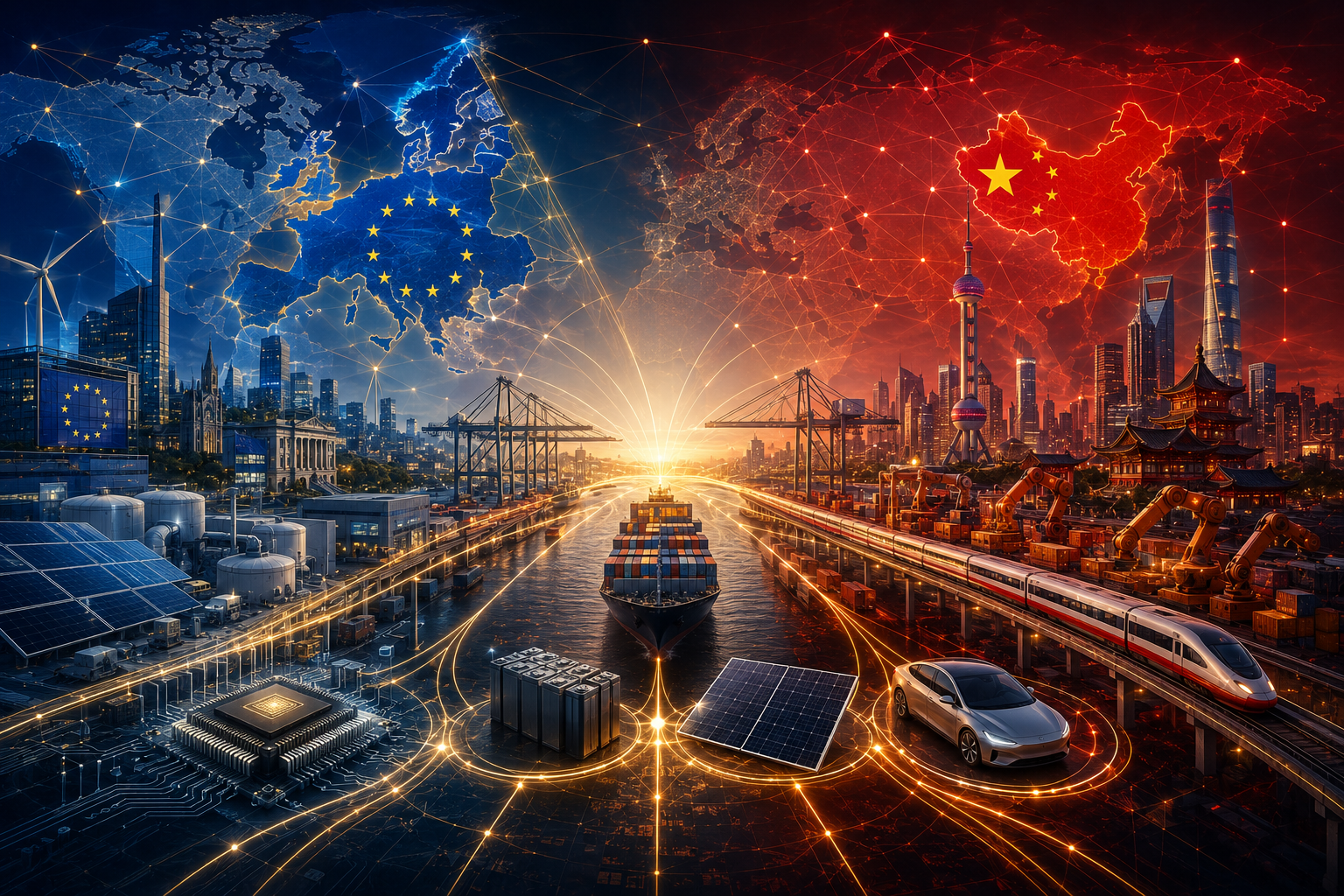
Why does Europe increasingly describe competition with China as unfair? The answer extends beyond tariffs, subsidies or trade disputes. At its core lies a deeper question: what happens when two fundamentally different economic systems compete within the same global marketplace?
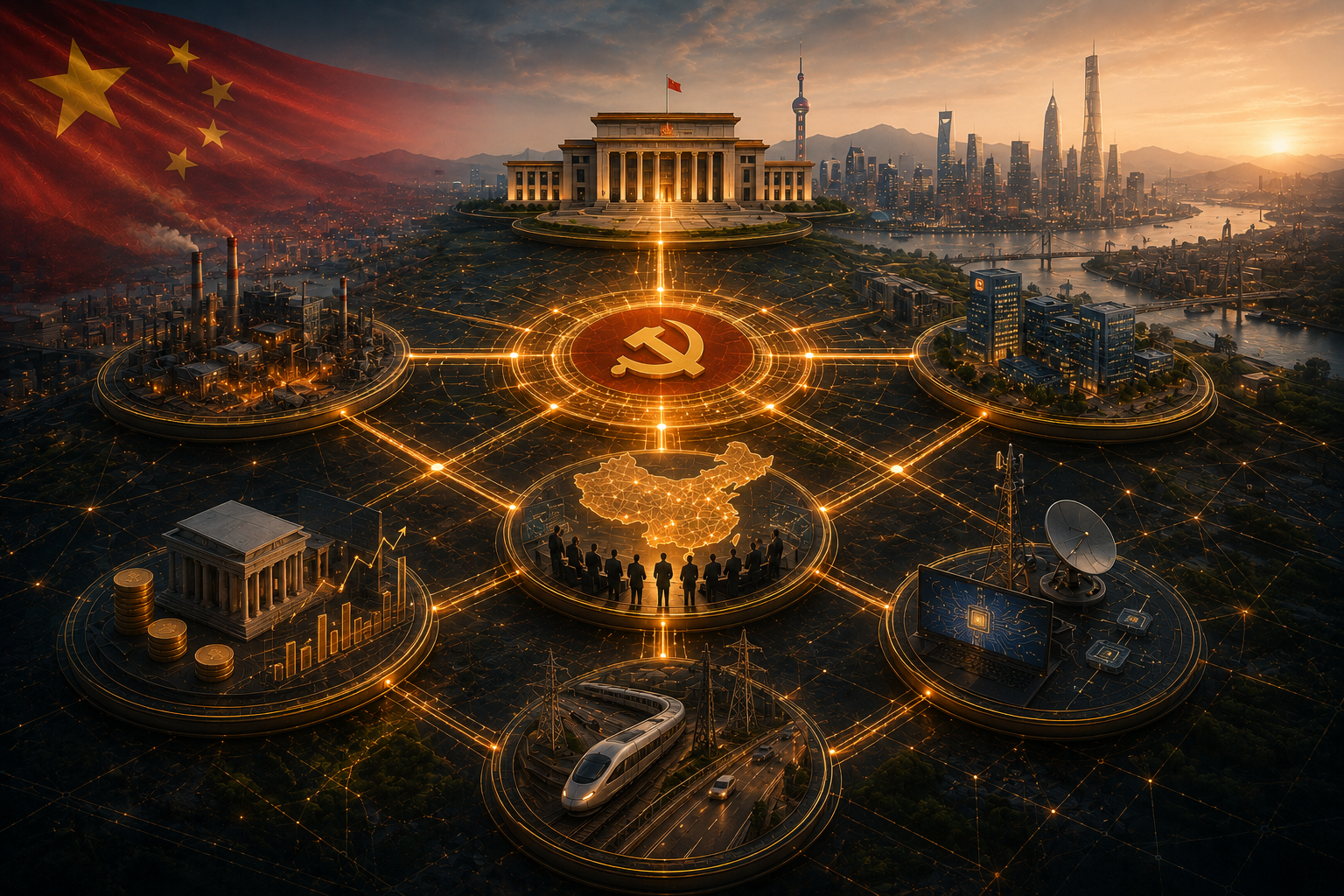
Many observers focus on China’s government or its companies. Yet understanding modern China requires examining the institution that connects them. The Communist Party functions not only as a political organisation, but also as a coordinating mechanism that links state institutions, economic development and long-term national priorities.

European companies and Chinese companies often compete in the same markets. Yet they frequently operate within very different economic architectures. Understanding those differences helps explain why debates about subsidies, trade and industrial policy have become increasingly central to relations between Europe and China.

Why does China invest hundreds of billions in semiconductors, artificial intelligence, batteries and high-speed rail? The answer lies in how Beijing views economic development. Many technologies are not seen as commercial sectors alone, but as strategic infrastructure that underpins future national power.

China is often described as communist, capitalist or something in between. Yet modern China operates through a distinctive hybrid system in which markets drive growth and innovation while the state retains the authority to guide economic development and long-term national priorities.
