
Southeast Asia sits at the center of intensifying U.S.–China rivalry, navigating a fragile balance between security and economic dependence. Through strategic autonomy and hedging, regional states resist alignment—yet rising tensions threaten to narrow the space that makes this delicate equilibrium possible.
Regional Relations
Regional relations define Asia’s geopolitical landscape through alliances, partnerships and strategic competition.
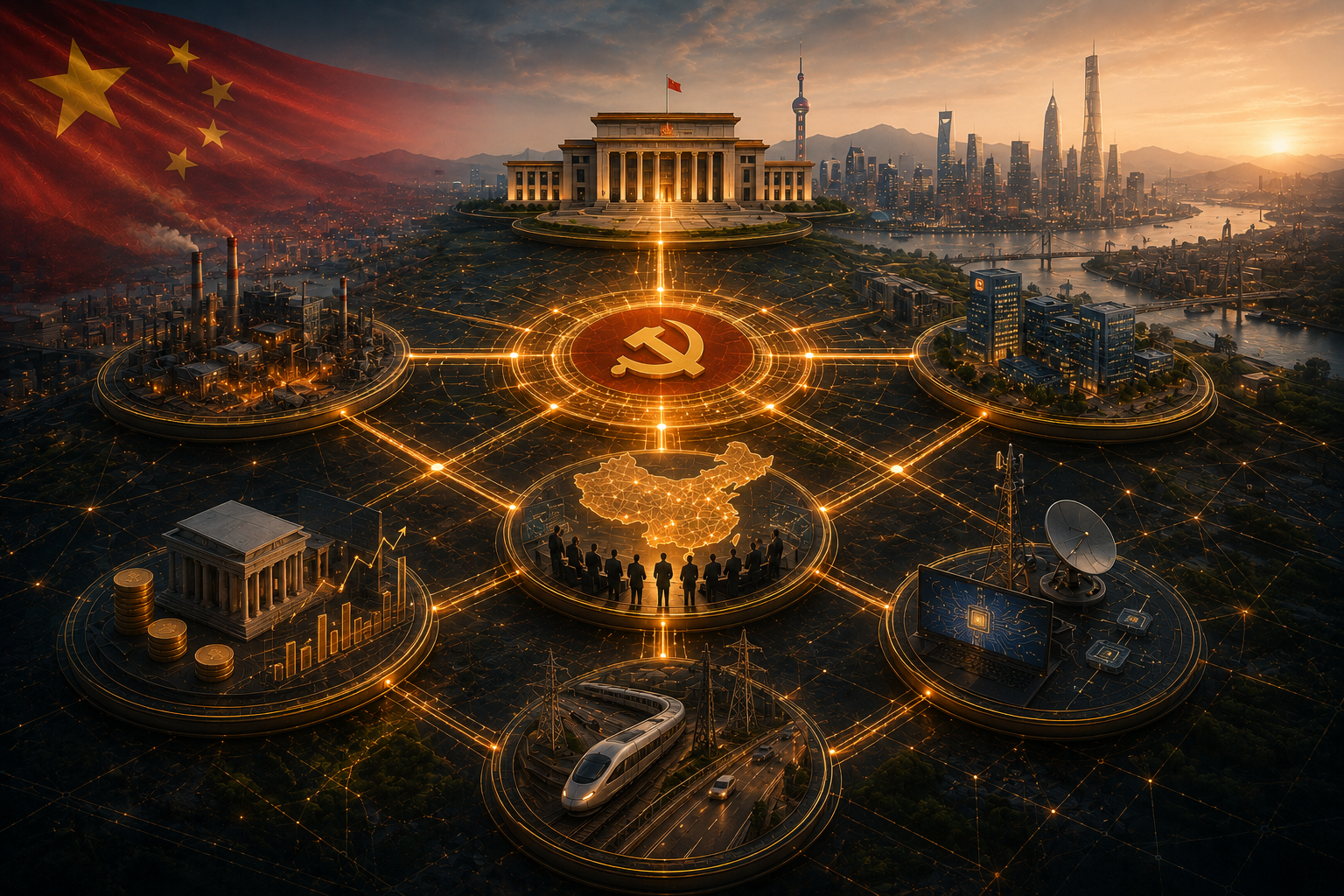
Many observers focus on China’s government or its companies. Yet understanding modern China requires examining the institution that connects them. The Communist Party functions not only as a political organisation, but also as a coordinating mechanism that links state institutions, economic development and long-term national priorities.

Macau is far more than a casino economy. Centuries of encounter between Chinese society and Portuguese institutions created a distinctive culture whose architecture, food, language and traditions still shape this small territory at the edge of southern China.
