Hong Kong — A City Built Between Worlds

How trade, migration and openness shaped one of Asia’s most distinctive urban societies
Hong Kong is one of the world’s most recognisable cities. Its towers rise almost vertically from Victoria Harbour, ferries cross between densely built shores and mountains frame an urban landscape compressed into remarkably little space.
For much of the outside world, this is the familiar Hong Kong: finance, property, trade and one of Asia’s most dramatic skylines. Yet the skyline explains surprisingly little about how Hong Kong became Hong Kong. The deeper story lies in movement.
For generations, people arrived from southern China and elsewhere in Asia to trade, work, escape instability or build new lives. British colonial institutions developed alongside Chinese families, businesses and traditions. Cantonese culture flourished within a city increasingly connected to international commerce, while merchants and migrants turned geographical constraint into economic opportunity.
Hong Kong did not emerge from a single cultural tradition. It emerged from exchange. That exchange eventually created something more than a trading centre. It produced a distinctive urban society: overwhelmingly Chinese in population and cultural roots, shaped by colonial institutions, connected to global markets and increasingly conscious of experiences that belonged specifically to Hong Kong.
Hong Kong’s greatest resource was never land. It was connection.
Understanding the city therefore begins not with 1997 and not with finance. It begins with the harbour.
Read MoreFrom Raw Materials to Industrial Power

Why Indonesia wants to build industries instead of simply exporting resources
For decades, Indonesia’s economy benefited from abundant natural resources. Coal, palm oil, copper, nickel and other minerals generated export revenues and helped fuel economic development. Yet much of the value created from those resources emerged elsewhere, where they were refined, processed and transformed into higher-value products.
Today, Indonesia is pursuing a different path. Rather than exporting raw materials alone, the country is increasingly seeking to build the industrial capacity required to process them domestically. The objective is no longer simply to extract resources from the ground. It is to capture a larger share of the value created above it.
Beyond Commodity Exports
Many resource-rich countries face a similar challenge. Natural resources can generate wealth, but they do not automatically create diversified economies. Mining, agriculture and energy production often provide export income, while the more profitable stages of manufacturing remain concentrated elsewhere.
The result is a familiar pattern. One country extracts raw materials. Another refines them. A third designs and integrates the final products.
Natural resources create opportunity. Industrial capacity determines how much of that opportunity remains at home.
Increasingly, the greatest economic value is created not during extraction itself, but through refining, advanced manufacturing and the integration of complex industrial systems. Countries that remain primarily exporters of commodities therefore remain more exposed to volatile resource markets while capturing only part of the value chain. Indonesia increasingly appears determined to change that equation.
Read MoreChina — A Civilisation That Became a State

Why understanding China begins with history rather than politics
For many people outside Asia, China is primarily viewed through the lens of geopolitics. Trade disputes, technological competition, artificial intelligence, manufacturing and military tensions dominate international headlines, creating the image of a rapidly rising global power reshaping the international order.Yet geopolitics explains only the latest chapter of China’s story.
While many Western societies naturally interpret political change through election cycles measured in years, China often understands national development across decades, generations and even centuries. That difference in historical perspective influences far more than government policy. It shapes how the country understands continuity, development and its own place in the world.
Understanding modern China therefore begins not with politics, but with history.
Long before the People’s Republic was founded in 1949, long before industrialisation and even before Europe entered the modern age, China had already developed one of the world’s oldest continuous civilisations. Dynasties rose and fell, capitals moved and governments changed, yet many of the underlying institutions, philosophies and cultural traditions continued to evolve rather than disappear.
This continuity helps explain why China often appears difficult to interpret through purely Western political frameworks. Modern China is certainly a nation state, but it also carries the accumulated experience of more than two millennia of civilisational development.
China is often described as a rising power. It may be more accurately understood as an ancient civilisation continuously reinventing itself.
Rather than asking only how China behaves today, it is equally important to ask how China understands itself. Only then does the relationship between history, society and state begin to make sense.
Read MoreSociety & Culture

South Korea’s Demographic Emergency
Sunday, July 12, 2026
South Korea has invested billions to reverse one of the world’s lowest birth rates, yet demographic decline continues. This essay explores why the challenge extends beyond financial incentives and what it reveals about the limits of governance in modern societies.
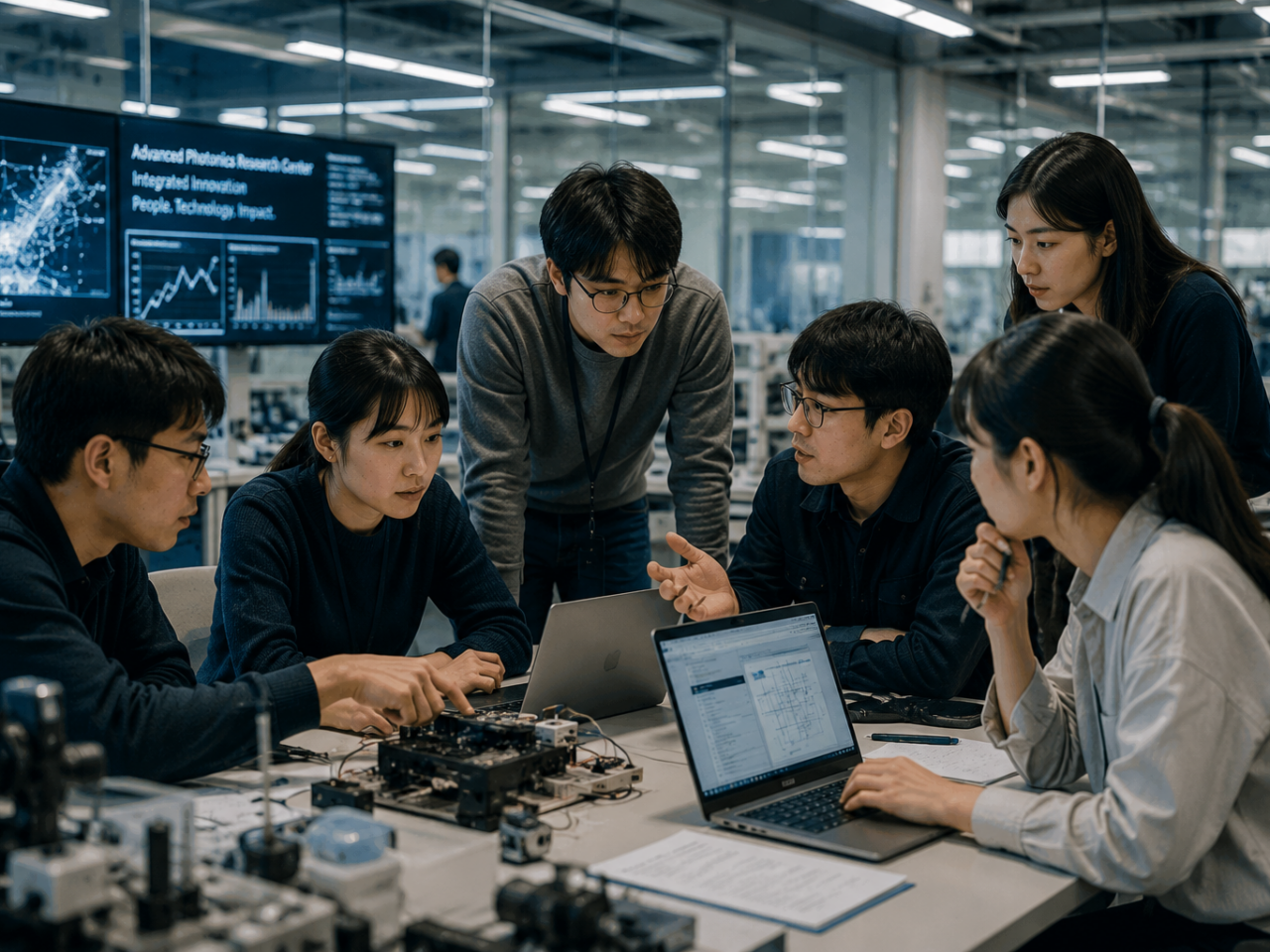
Asia Is Engineering Talent at System Level
Thursday, June 11, 2026
Across Asia, universities are increasingly becoming part of coordinated talent systems designed to support innovation, industrial capacity and national competitiveness. Education is evolving from a social institution into strategic infrastructure for generating the capabilities that shape future economic power.

When Education No Longer Guarantees Security
Monday, June 8, 2026
For decades, education was one of China’s most reliable pathways to opportunity and upward mobility. Today, academic achievement remains highly valued, yet growing numbers of graduates are discovering that qualifications no longer provide the same certainty they once did. This essay explores the widening gap between educational success and confidence in the future.

The Silent Joke — Trying to Be Normal
Saturday, May 30, 2026
On a crowded Tokyo train, a barking toy hidden inside a young woman’s bag creates a moment of silent chaos. Everyone hears it. Everyone knows she knows. Yet nobody says a word. The humor lies in the shared effort to keep acting normal.
