Asia Is Engineering Talent at System Level
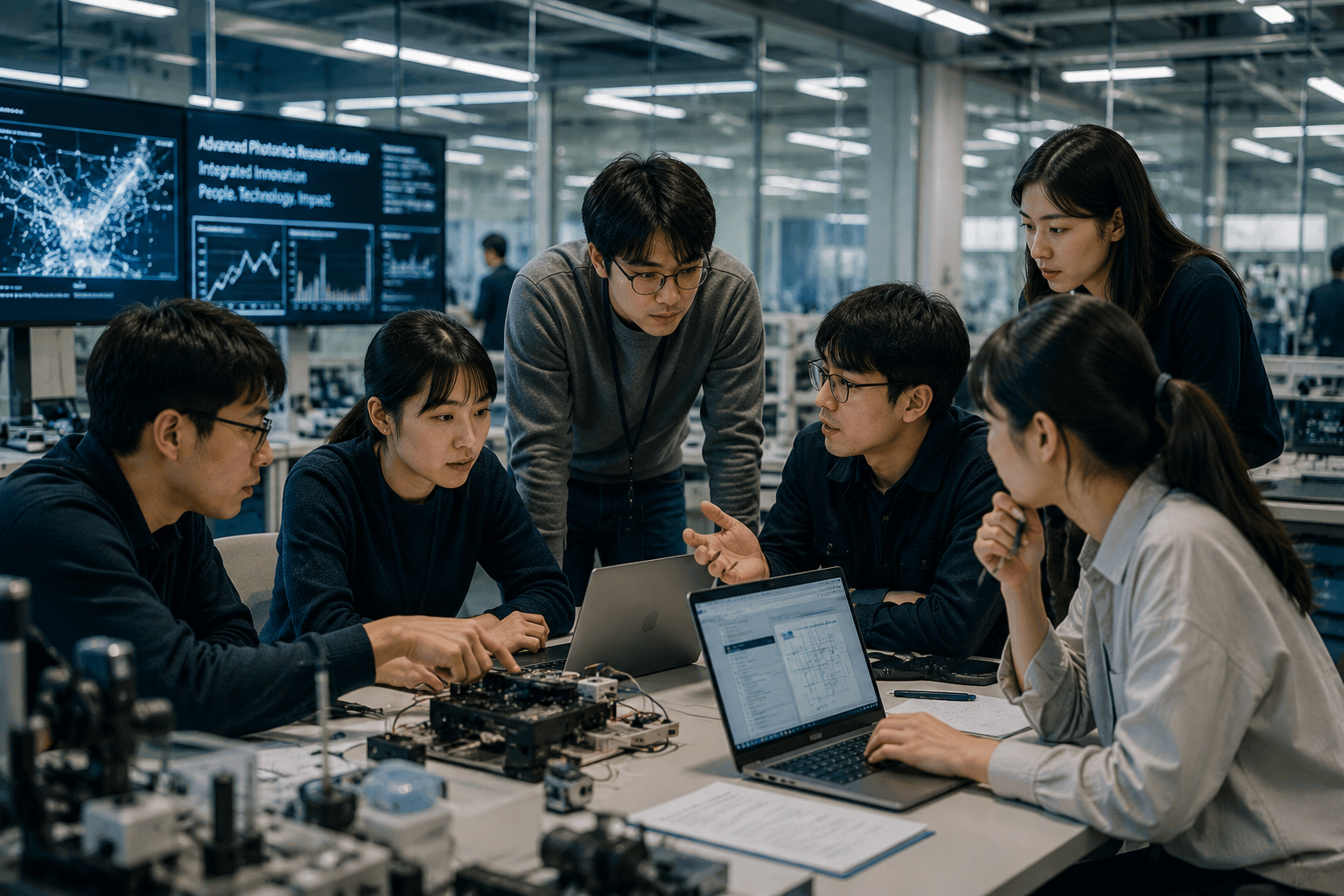
Elite institutions are evolving from education providers into coordinated infrastructure for global influence
🔶 System Shift
Across Asia, education is increasingly being treated as strategic infrastructure. As competition shifts from labor and capital to knowledge and capability, universities are becoming integrated talent systems designed to support innovation, industrial capacity and long-term national competitiveness.
🔹 The premise
For much of the modern era, education was primarily viewed as a social investment. Universities educated students. Researchers produced knowledge. Governments funded institutions.
The connection between education and economic development was acknowledged, but often indirect. Across Asia, that understanding is beginning to change.
Increasingly, education is being treated not merely as a social good, but as strategic infrastructure. The objective is no longer simply to educate people. It is to generate capability.
🔹 The shift
The traditional university was designed around autonomy. Knowledge creation was its primary function. Economic outcomes were often viewed as secondary consequences. Across parts of Asia, a different model is emerging.
Universities are increasingly being integrated into broader systems that connect research, industry, investment and national strategy. The result is a shift from institutional autonomy toward strategic orchestration.
Education is no longer operating as a standalone institution. It is becoming part of a coordinated talent architecture. The focus is moving from enrollment to output. From degrees to capability. From education to talent generation.
🔹 Beyond human capital
For decades, economists measured success through the accumulation of human capital. The assumption was simple: more educated people would generate more growth.
The emerging model is more precise. Countries are increasingly focused on the yield of talent.
• How many engineers enter strategic industries?
• How many researchers contribute to artificial intelligence, semiconductors or advanced manufacturing?
• How effectively does education translate into productive capacity?
The distinction matters. An educated individual represents potential. A talent pipeline represents systemic capability. The strategic focus shifts from counting graduates to measuring throughput.
One is measured person by person. The other is measured through its ability to continuously supply critical sectors with the expertise they require.
🔹 The mechanics
The transformation is visible across Asia.
In Singapore, institutions such as NUS and NTU increasingly operate within a broader framework linking education, innovation policy and industrial development. Research priorities, talent attraction and economic strategy are increasingly aligned through national planning mechanisms. Universities function not only as educational institutions but as critical components of the country’s innovation infrastructure.
In China, universities play a growing role in supporting technological self-reliance. Academic programs, research funding and institutional priorities are increasingly connected to strategic sectors such as artificial intelligence, advanced materials and semiconductor technologies. Talent generation has become closely linked to national objectives surrounding technological sovereignty and industrial resilience.
South Korea offers a different variation. Universities, research institutes and industrial groups operate within highly integrated innovation ecosystems. In some cases, students are trained directly for future roles within industries considered strategically important to national competitiveness.
The common pattern is becoming difficult to ignore. Education is increasingly being designed as infrastructure.
🔹 The onshoring of talent
For decades, many advanced economies relied heavily on the global circulation of talent. Universities imported students. Companies imported skilled workers. Migration functioned as an external source of capability.
Across parts of Asia, a different logic is emerging. Countries are investing not only in attracting talent, but in manufacturing it domestically. The supply chain of knowledge is becoming increasingly verticalized.
Talent generation is being brought closer to home. This represents a subtle but important shift. The objective is no longer merely to acquire capability. It is to produce it.
The result is both greater resilience and greater attraction. Strong domestic talent systems reduce dependence on external supply while simultaneously drawing global talent toward them.
🔹 The geopolitical dimension
What makes this development particularly significant is that it changes how power accumulates. The competition is no longer limited to attracting talent from elsewhere.
Countries are increasingly competing to build the systems that generate talent in the first place. This shifts the focus from migration to formation. From acquisition to production. From importing capability to engineering it.
Education therefore becomes more than a social institution. It becomes a strategic asset. A nation that controls its talent pipeline gains greater resilience, greater technological capacity and greater freedom of action.
🔹 The system shift
Education is increasingly being treated less as a social expenditure and more as a long-term capital investment. Much like ports, airports or industrial infrastructure, talent systems require substantial upfront investment while generating strategic capacity over decades.
Previous generations built ports, highways and industrial parks to move goods efficiently across economies. Today’s strategic economies are building something different. They are constructing systems designed to move talent from potential to capability.
Universities, research institutes, venture capital networks, government agencies and industry are increasingly being connected into a single architecture. The product moving through these systems is not cargo. It is human capability.
🔹 Closing
The most valuable infrastructure of the twenty-first century may not be physical. It may be educational.
Across Asia, universities are evolving from institutions of learning into institutions of strategic capacity.
And as demographic pressures, technological competition and geopolitical fragmentation intensify, the ability to engineer talent may become one of the most important sources of power a nation can possess.
Credit
Image generated by AI (DALL·E), 2026.
Caption
The competition is no longer simply for talent. It is increasingly for the systems that produce talent.
