Macau — A Society Shaped by Encounter
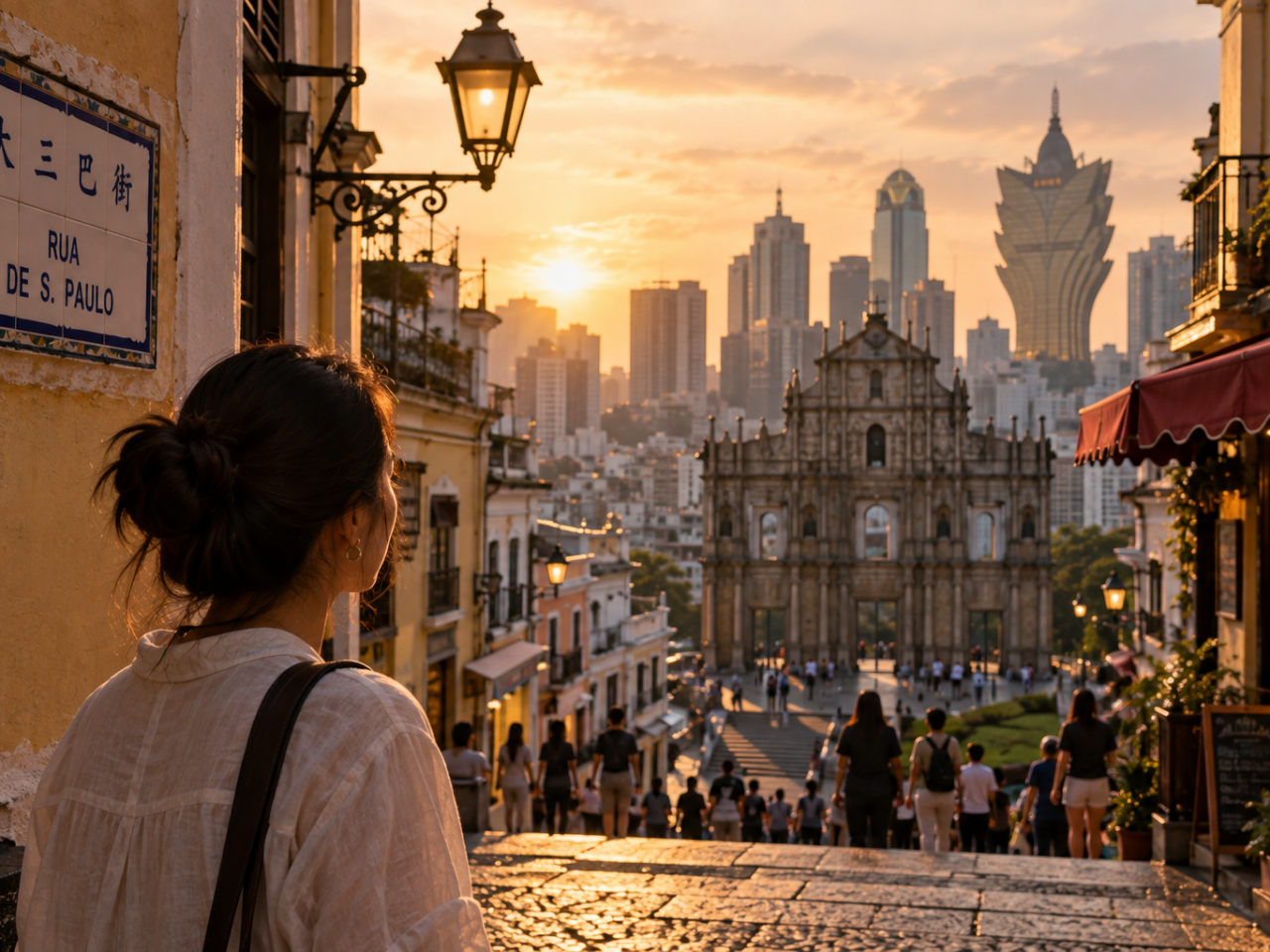
How centuries of exchange created one of Asia’s most unusual small societies
Macau is usually introduced through numbers: casino revenues, visitor arrivals, hotel rooms and the extraordinary amounts of money that pass through an exceptionally small territory. For much of the outside world, the city has become almost synonymous with gaming. Yet these numbers explain surprisingly little about Macau.
Walk beyond the large resorts and another place appears. Portuguese street names accompany Chinese characters. Catholic churches stand within walking distance of Chinese temples. Cantonese dominates everyday conversation, while Portuguese remains embedded in public institutions and the legal system. Restaurants serve dishes whose histories stretch across maritime routes connecting southern China with distant parts of the Portuguese-speaking world. These are not simply remnants of a colonial past. Together, they reveal something fundamental about the society that developed here.
Macau was never simply Portuguese or Chinese. Its distinctiveness emerged from the long encounter between them.
For centuries, Macau existed at the intersection of worlds much larger than itself. Chinese merchants, Portuguese traders, missionaries, sailors and families lived within a territory connected not only to southern China, but also to Japan, Southeast Asia, India and Europe. Languages, religions, foods and institutions encountered one another repeatedly, sometimes peacefully and sometimes uneasily.
The result was never a perfect fusion of cultures. Nor did one society simply replace another. Macau became distinctive because different traditions accumulated beside one another for an unusually long time. Understanding Macau therefore begins not with casinos, and not with the transfer of sovereignty in 1999. It begins with encounter.
Read MoreThe Sovereign Balance Sheet
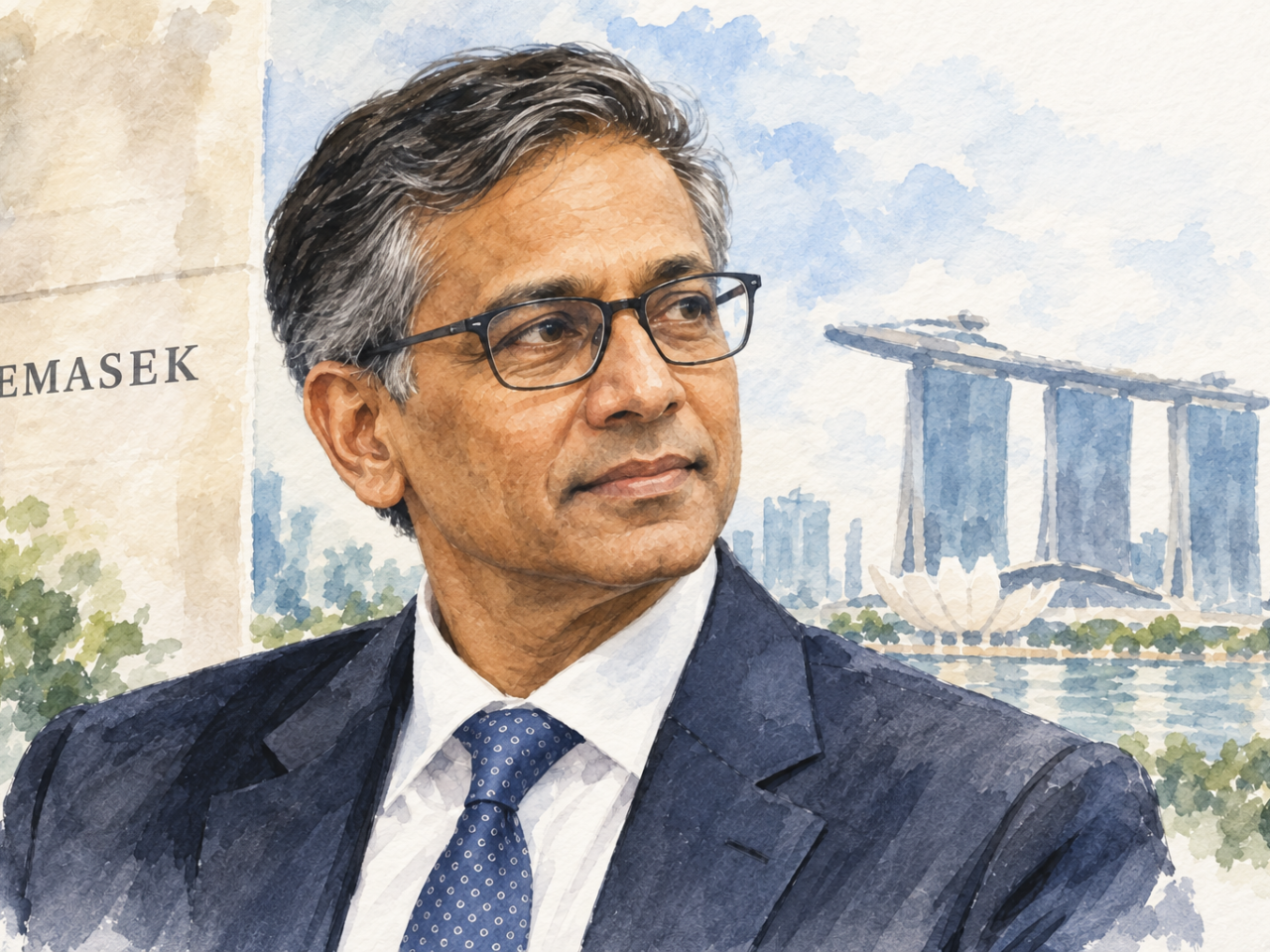
Dilhan Pillay and what it means to invest in generations
Singapore owns Temasek. But Temasek is not a ministry. That distinction is central to understanding Dilhan Pillay, the lawyer-turned-investor who has led Temasek Holdings since 2021. The company is wholly owned by Singapore’s Minister for Finance, yet its investment decisions are made commercially. Its board operates at arm’s length from government, while carrying a constitutional responsibility to protect the company’s past reserves.
That gives Pillay something rare: a balance sheet with public ownership, commercial discipline and no obligation to think in quarterly market cycles.
“Temasek operates at the intersection of geopolitics, business, energy and technology.”
Dilhan Pillay, Chief Executive Officer, Temasek
It is also why Temasek matters to The New Architecture of Asian Capital. Hiromi Yamaji is trying to make existing Japanese capital move more efficiently through market discipline. Pillay represents another model: capital that can be deliberately positioned across decades.
Read MoreThe Great Reallocation

Hiromi Yamaji and the exchange that asked Japanese companies to use their capital
Japan has never suffered from a shortage of capital. For decades, the opposite was closer to the truth. Japanese households accumulated vast savings, corporations built formidable cash reserves and some of the country’s largest businesses developed balance sheets capable of absorbing almost any shock.
Yet resilience came with a cost. Capital that protects a company from uncertainty is not necessarily capital that creates new value. That distinction is now moving to the centre of Japan’s economic transformation.
“The shift from savings to investment”
Hiromi Yamaji, Group CEO, Japan Exchange Group
Yamaji used those words at the beginning of 2026 to describe a change he believed was finally gathering momentum. It is an unusually concise description of what Japan is attempting: not simply to attract more money into its markets, but to alter what households, investors and corporations believe capital is for.
That makes Yamaji an unusual but revealing first figure in The New Architecture of Asian Capital. He does not control a sovereign wealth fund, a global bank or an industrial conglomerate. He runs part of the institutional plumbing of capitalism itself: Japan Exchange Group, the market infrastructure through which companies access investors and investors price companies. Yet under Yamaji, that infrastructure has increasingly become something more active — an institution attempting to reshape the incentives behind corporate behaviour.
Read MoreSociety & Culture

When the Mall Becomes the City
Sunday, August 2, 2026
In Kuala Lumpur, shopping malls have evolved beyond retail. Shaped by climate, mobility and urban density, they increasingly function as places where people meet, work and spend time—raising a broader question about how cities organise public life in the twenty-first century.

China — A Civilisation That Became a State
Saturday, August 1, 2026
China is often viewed through geopolitics and economic competition. This portrait explores the deeper foundations of Chinese society, revealing how history, civilisation and statecraft continue to shape one of the world’s most influential nations.

South Korea — A Society Built on Acceleration
Saturday, July 25, 2026
South Korea’s remarkable rise is often explained through technology and global brands. Yet its greatest achievement may be the rapid transformation of an entire society, where education, industrial policy and collective ambition reshaped one of the world’s most dynamic democracies within a single generation.

Japan — A Society Built on Continuity
Saturday, July 18, 2026
Behind Japan’s technological achievements lies a society built on continuity, craftsmanship and shared responsibility. This portrait explores how culture, institutions and demographic change continue to shape one of Asia’s most influential and resilient nations.
