The End of Automatic Growth

The quiet signals behind China’s slowing momentum
China remains one of the world’s largest industrial powers, yet beneath the language of resilience and stability, quieter economic signals are beginning to emerge. The issue is not sudden collapse, but the gradual disappearance of automatic momentum that once seemed almost permanent.
For decades, China’s economic model appeared nearly unstoppable. Urbanisation accelerated, exports expanded, construction boomed and local governments financed growth through land development and infrastructure. Growth itself became part of the national psychology. But today, Beijing increasingly faces a different challenge: not how to accelerate expansion, but how to manage deceleration without undermining confidence.
The Problem With Deflation
In many economies, inflation is seen as the primary danger. In China, the greater concern has quietly become the opposite.
Read MoreEurope’s Semiconductor Strategy Is Quietly Changing
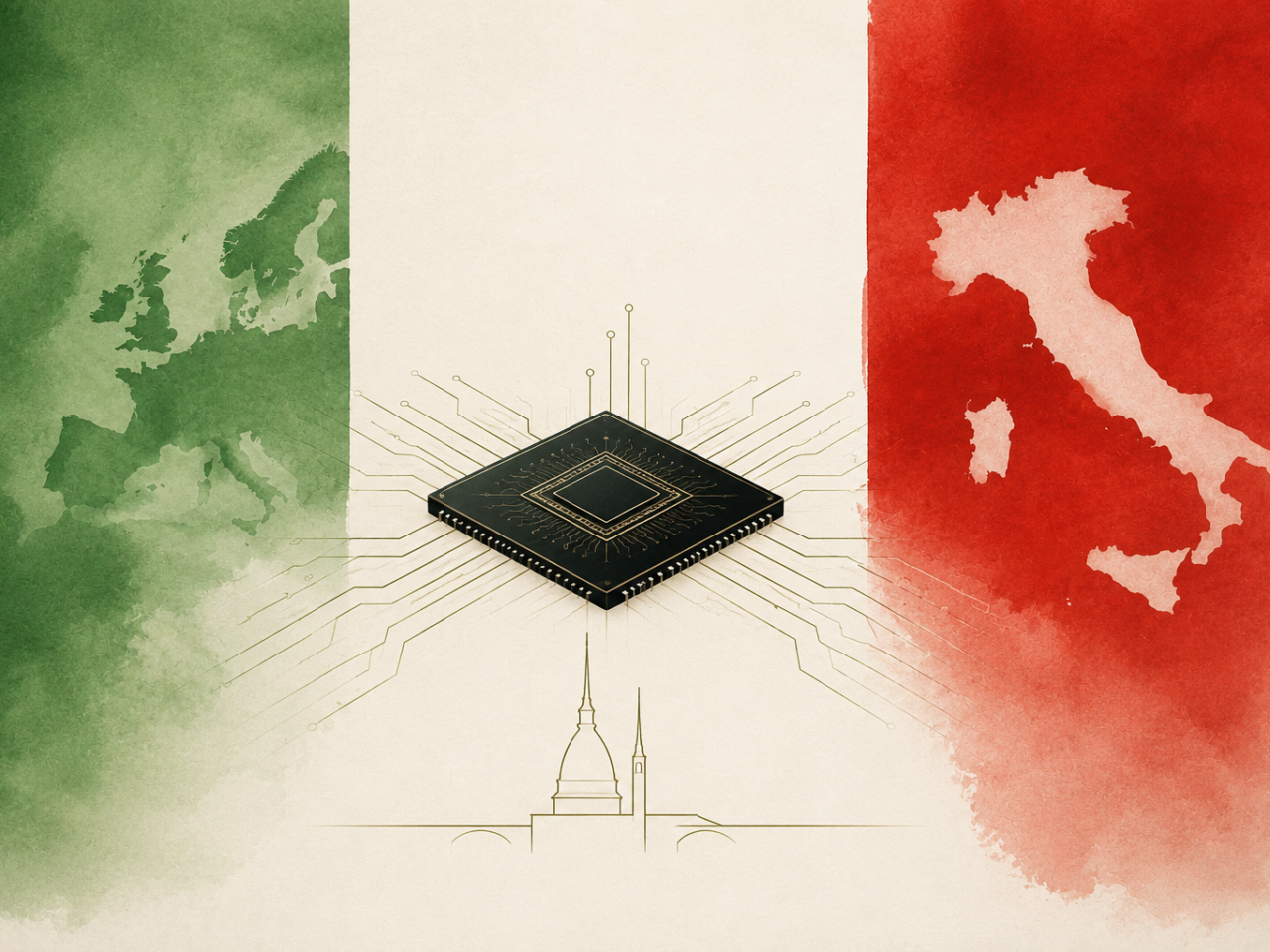
Why Europe is moving away from the illusion of full semiconductor autonomy and toward a strategy of technological indispensability in the age of AI infrastructure
For years, Europe’s semiconductor ambitions largely focused on rebuilding manufacturing capacity and reducing dependence on foreign supply chains. But as artificial intelligence rapidly transforms the global technology landscape, Europe is beginning to rethink what technological power actually means.
When the European Union launched the original Chips Act in 2022, the political objective appeared relatively straightforward.
Europe wanted to strengthen domestic semiconductor production, reduce external dependencies and regain industrial resilience after pandemic-era shortages exposed the fragility of global supply chains.
At the time, much of the discussion focused on fabs.
Large manufacturing plants became symbolic of technological sovereignty itself. Semiconductor power was still largely understood through the lens of production scale, advanced nodes and manufacturing capacity.
But the semiconductor industry has changed dramatically over the past two years.
Artificial intelligence systems are rapidly increasing the importance of advanced packaging, heterogeneous integration and hyperscale compute infrastructure. Increasingly, the challenge is no longer simply producing advanced chips — but physically integrating them into functioning AI architectures.
And that shift is forcing Europe to reconsider its strategy.
Read MoreKioxia: The Forgotten Memory Giant Behind the Digital World

How the former Toshiba Memory became one of the world’s most critical suppliers of digital storage
Artificial intelligence may define the current technological narrative, but intelligence alone is not enough. Every AI model, cloud platform and digital service depends on something more fundamental: memory.
Data must be stored, retrieved, transferred and preserved continuously. Every prompt entered into a chatbot, every recommendation generated by an algorithm and every model trained inside a datacenter ultimately relies on physical storage infrastructure. The digital economy may appear weightless, but its memory remains deeply material.
Yet while companies such as Nvidia dominate headlines as the architects of AI computation, far less attention is given to the companies responsible for storing the world’s information. Among them stands Kioxia, one of the largest producers of NAND flash memory in the world and one of the least publicly recognized pillars of the modern digital system.
The irony is striking. The company traces its origins directly to the invention of NAND flash memory itself, developed by Toshiba engineers in the late 1980s. In many ways, the modern smartphone era—and by extension much of cloud computing—emerged from technological foundations first established in Japan.
“Toshiba’s invention of NAND flash memory in 1987 transformed the tech landscape. Today, as Kioxia, that foundational legacy in material science remains Japan’s most critical weight in the global solid-state storage architecture.”
Atsuo Shimizu
Senior Technology Analyst
Tokyo Institute of Technology / Techno Systems Research
The statement reflects a broader reality often overlooked in discussions about artificial intelligence and cloud infrastructure. While software increasingly dominates public imagination, the underlying physical systems remain decisive. Data must exist somewhere. And increasingly, that “somewhere” is NAND flash memory.
Read MoreSociety & Culture

The Philippines’ AI Gamble
Friday, February 27, 2026
As artificial intelligence reshapes global outsourcing, the Philippines faces a defining test: can the world’s call-centre capital reinvent itself as an AI-driven tech hub while navigating US–China rivalry, energy constraints and the urgent need to reskill millions of workers?
