
China is often described as communist, capitalist or something in between. Yet modern China operates through a distinctive hybrid system in which markets drive growth and innovation while the state retains the authority to guide economic development and long-term national priorities.
Infrastructure
Infrastructure connects cities, industries and markets, enabling Asia’s economic expansion and regional integration.

Europe’s technology strategy is not about isolation. It is about resilience through partnership. As Europe builds its capabilities in semiconductors, cloud infrastructure and artificial intelligence, cooperation with India on talent, digital infrastructure and innovation could help shape the next era of global technology.
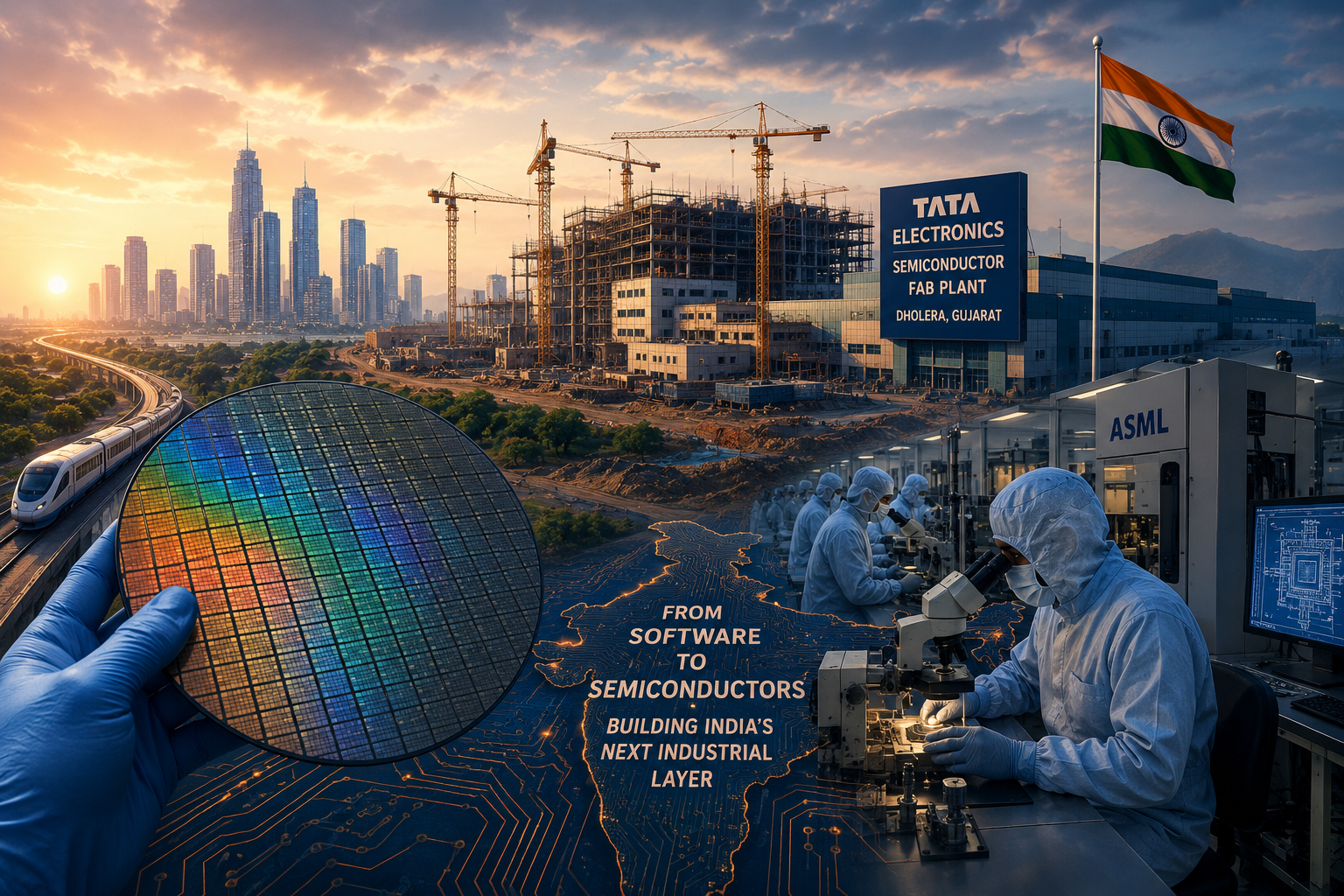
India’s semiconductor ambitions are often described as a technology story. Increasingly, they look like something deeper: a shift from software to industrial capability, from talent to ecosystems, and from participation in global supply chains to becoming indispensable within them.

ASML and Tata Electronics have signed an agreement supporting India’s semiconductor ambitions. As India aims to build at least ten advanced chip facilities, the country is shifting from a software-focused technology economy toward strategic industrial manufacturing capacity.

Quantum computing is becoming more than a technological breakthrough. Across Asia and beyond, it is evolving into a strategic contest over infrastructure, standards, cybersecurity and control—reshaping how power is organized in an increasingly interconnected digital world.

As the internet moves beyond screens and into factories, ports and urban infrastructure, Asia is emerging as the global leader of the physical internet. Dense industrial ecosystems, coordinated infrastructure policy and manufacturing scale are giving the region structural advantages the West increasingly struggles to match.
