The Algorithm that Lends
How AI and Fintech Are Reshaping Micro-Entrepreneurship in Southeast Asia
A Loan in Seconds
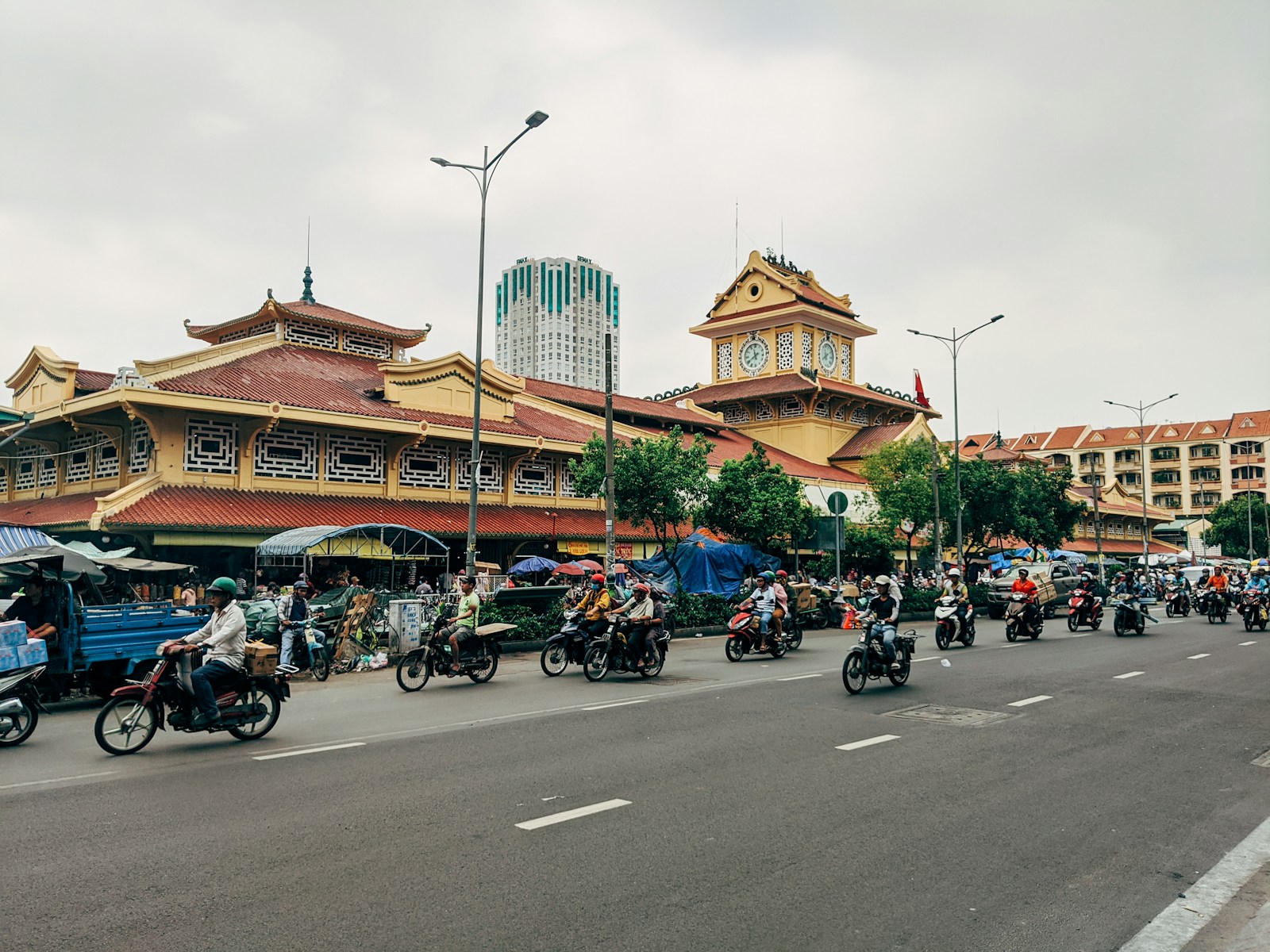
The morning sun slid over the rooftops of Ho Chi Minh City, glinting off wet pavements and spilling across the bustling Ben Thanh market. The scent of fried fish mingled with the sharp honks of scooters and the faint hum of delivery drones tracing their aerial routes. Among stalls overflowing with rice, vegetables and plastic bags stood Lan, a young micro-entrepreneur running a tiny grocery stand. Her hands rested on her smartphone, awaiting the result of a credit application — a decision that would arrive within seconds, invisible and final.
It had become a ritual. Lan had learned to regulate her breathing while waiting, as if the seconds between “submit” and “approved” carried their own weight. The algorithm watched every action: the sale of a soda can, a payment to her supplier, the foot traffic past her stall. It formed an invisible map of her daily work, a reflection of her life made digital.
“True financial inclusion begins by recognizing people as they are, not as legacy systems expect them to be. For the unbanked, financial activity has never been absent; it has simply been invisible. AI can reveal opportunities to borrow in places where legacy systems see only risk.”
— World Economic Forum (WEF), Future of Finance Report, June 2025
Lan smiled faintly at the thought. In the past, her creditworthiness barely existed; local banks relied on paper forms that never told the full story. Now, the digital flow of mobile payments, e-commerce orders and QR transactions reflected her enterprise as it truly existed — small, vibrant and full of potential.
Around her, the market thrummed with life, a stream of people and goods mirrored in the algorithm translating every movement into numbers and probabilities. Within a fraction of a second, the system would decide whether Lan could borrow for a new shipment of fish or spices. She knew the decision came from servers thousands of miles away — somewhere in Silicon Valley or Hangzhou — yet for her it felt as if the city itself weighed her potential.
The contrast between old and new was tangible. Behind her counter hung a handwritten calendar, while her fingers hovered over a glowing screen, checking progress. Human experience and digital logic intertwined here: the algorithm had no empathy, no understanding of pride or shame, yet Lan felt each emotion reflected in the blinking digits of approval or denial.
She remembered the stories older entrepreneurs told — days spent in banks negotiating personal loans, each rejection felt viscerally, etched into body and face. Now the “no” was colder, more anonymous, yet somehow scarier: there was no room for negotiation, no way to appeal.
“Fintech is unlocking financial inclusion at a scale unseen before in Southeast Asia. Startups here are leapfrogging legacy systems with mobile-first, data-driven solutions that serve millions.”
— Anju Patwardhan, Partner at Bain & Company
Everywhere she looked, others experienced the same paradox: street food vendors, small café owners and market stall operators. They navigated mobile-first, data-driven platforms that gave access to capital, yet tethered them to invisible infrastructures that dictated opportunity and risk alike. The digital tide lifted many, but uncertainty flowed with it, unpredictable and omnipresent.
Leapfrogging Finance
In Southeast Asia, fintech has transformed daily life with startling speed. Vietnam and the Philippines have mobile penetration rates exceeding 80%, while traditional banking often remains inaccessible to micro-entrepreneurs. Startups are leapfrogging legacy systems with data-driven, mobile-first platforms, offering loans, digital wallets and QR-based payments to millions previously unbanked.
Behind these services, geopolitical and infrastructural realities loom. Cloud providers in the U.S. — Amazon Web Services, Google Cloud — coexist and sometimes compete with Chinese platforms embedded in super-apps like Alipay and WeChat. For a small vendor in Manila, her creditworthiness is evaluated by an algorithm trained far beyond local oversight. Who truly controls the flow of financial data and what happens if a server fails or geopolitical tensions disrupt the digital backbone?
The AI systems analyze a wealth of digital activity: e-commerce purchases, food delivery orders, telco payments. Each transaction contributes to a broader picture of reliability that traditional scoring systems could never capture. The technology enables financial inclusion at scale, yet it also imposes dependence.
“With AI coming up hard and fast, 2025 has accelerated the transition in how we evaluate creditworthiness. Each e-commerce purchase, food delivery order and telco payment paints a fuller picture of financial reliability than traditional scoring ever could.”
— Expert Panel, 2025 FinTech Predictions for ASEAN
The contrast between autonomy and algorithmic oversight is stark. Entrepreneurs can secure loans without leaving their stall, yet the decisions governing their livelihoods are made by systems they cannot question, fully dependent on opaque AI models and international data centers.
Lives in the Algorithm
Lan’s day stretched on: morning sales, supplier calls and the anxious seconds spent watching her credit application process. Every micro-decision mattered: a slight delay could affect the flow of stock and a miscalculated payment could influence her score.
Other entrepreneurs shared similar experiences. Roberto Cruz, a street vendor in Manila, described the tension:
“I can now plan my week knowing if I have funds. But I also feel like someone else is deciding if I survive or not.”
— Roberto Cruz, Street Vendor, Manila
The technology opened doors once closed by bureaucracy or geographic isolation, yet it also introduced a quiet vulnerability. Linh Tran, a microfinance advisor in Hanoi, explained:
“AI opens doors, but it also closes them quietly if you don’t fit the algorithm.”
— Linh Tran, Microfinance Advisor, Hanoi
Small business owners learned to navigate this paradox daily: empowerment intertwined with exposure, speed with opacity. Each notification carried both opportunity and risk, shaping the contours of a life once defined solely by personal effort and local relationships.
Power and Data
AI-fintech in Southeast Asia exemplifies leapfrogging — bypassing legacy financial infrastructure with mobile-first innovation. However, dependence on foreign cloud providers and data infrastructures introduces geopolitical risk. U.S. and Chinese tech giants compete for influence, embedding their systems into local economies. The independence of micro-entrepreneurs is conditional; their financial lives rely on algorithms far beyond their immediate control.
This shift also changes the human experience of money. Financial inclusion is no longer only about access, but about visibility: the algorithm makes the invisible activity visible. Entrepreneurs gain opportunities, but traditional social cues — negotiation, personal banking relationships, reputational consequences — are diminished.
“Digital finance is central to this vision — enabling secure transactions, expanding business access to capital and strengthening cross-border connectivity. By promoting innovation responsibly, Viet Nam can become a competitive regional hub.”
— Statement, Digital Finance Inclusion Conference 2025, Ho Chi Minh City, supported by World Bank Group
Ethical questions persist: Who owns the data? Can algorithms account for human context and nuance? Are AI-driven financial decisions reinforcing inclusion or creating new forms of vulnerability?
Invisible Streams
Lan closed her stall as the sun began to set. The market emptied, but the digital stream continued, a pulse invisible yet relentless. In her pocket, her phone contained not just money but a digital mirror of her labor, her risk and her potential. The algorithm that lent her capital had no face, no empathy, but it had reshaped her possibilities.
“We want to democratize finance for the 100 million people in Southeast Asia who remain unbanked or underbanked.”
— Ming Maa, CEO GrabPay
This is the paradox of modern fintech: empowerment mingled with uncertainty, anonymity that both shields and isolates, and a future in which human agency flows alongside and sometimes beneath, lines of code. As Southeast Asia continues to innovate at scale, the challenge is not just technological — it is profoundly human.
“True financial inclusion begins by recognizing people as they are…”
— WEF
The streams of digital water are everywhere, and entrepreneurs like Lan navigate them daily, shaping their own futures while the algorithms quietly shape the world around them.
