Europe’s Semiconductor Strategy Is Quietly Changing
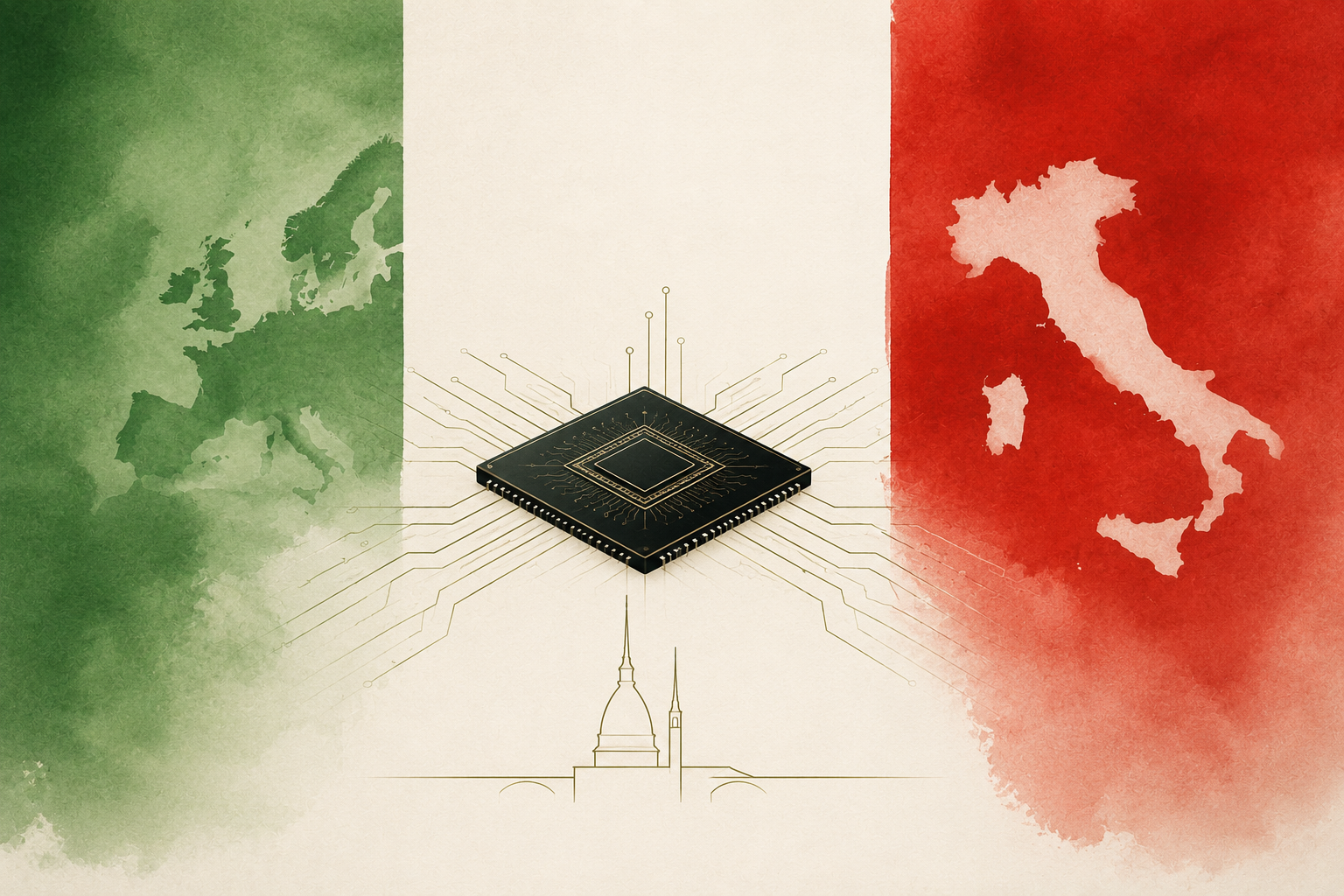
Why Europe is moving away from the illusion of full semiconductor autonomy and toward a strategy of technological indispensability in the age of AI infrastructure
For years, Europe’s semiconductor ambitions largely focused on rebuilding manufacturing capacity and reducing dependence on foreign supply chains. But as artificial intelligence rapidly transforms the global technology landscape, Europe is beginning to rethink what technological power actually means.
When the European Union launched the original Chips Act in 2022, the political objective appeared relatively straightforward.
Europe wanted to strengthen domestic semiconductor production, reduce external dependencies and regain industrial resilience after pandemic-era shortages exposed the fragility of global supply chains.
At the time, much of the discussion focused on fabs.
Large manufacturing plants became symbolic of technological sovereignty itself. Semiconductor power was still largely understood through the lens of production scale, advanced nodes and manufacturing capacity.
But the semiconductor industry has changed dramatically over the past two years.
Artificial intelligence systems are rapidly increasing the importance of advanced packaging, heterogeneous integration and hyperscale compute infrastructure. Increasingly, the challenge is no longer simply producing advanced chips — but physically integrating them into functioning AI architectures.
And that shift is forcing Europe to reconsider its strategy.
The rise of the invisible infrastructure layer
One of the most important transformations inside the semiconductor industry is occurring far away from public attention.
Modern AI systems increasingly depend on advanced packaging technologies capable of connecting multiple chiplets, memory systems and interconnect layers into one unified computational environment.
In practice, packaging is becoming computational architecture itself.
For decades, semiconductor progress largely revolved around shrinking transistors and improving front-end manufacturing efficiency. But physical and thermal limitations are making traditional monolithic chip scaling increasingly difficult and expensive.
As a result, the industry is shifting toward modular AI architectures built around heterogeneous integration.
This dramatically increases the importance of the back-end of semiconductor production — particularly OSAT (Outsourced Semiconductor Assembly and Test) and advanced packaging infrastructure.
And this is precisely where Asia already occupies an enormously powerful position.
Taiwan, Malaysia, Singapore, South Korea and China remain deeply embedded inside the physical infrastructure layers underpinning modern AI systems. Companies across the region increasingly control the packaging ecosystems connecting advanced processors into deployable compute architectures.
The semiconductor debate is therefore no longer simply about manufacturing chips.
Increasingly, it is about controlling the infrastructure layers connecting entire computational ecosystems together.
Europe’s strategic realization
This changing reality appears to be quietly reshaping Europe’s semiconductor thinking.
The original Chips Act largely reflected the language of sovereignty and strategic autonomy. The assumption was that resilience required rebuilding domestic production capacity and reducing external dependence.
But complete semiconductor self-sufficiency may simply be unrealistic.
Modern semiconductor production depends on an extraordinarily interconnected ecosystem involving lithography, advanced materials, chip design, substrates, packaging, software, industrial equipment, logistics infrastructure and energy systems.
No single region controls every layer.
“No region can realistically achieve complete semiconductor self-sufficiency across the entire value chain.”
European Court of Auditors — Special Report on the Chips Act
As AI infrastructure rapidly expands, that interdependence is becoming even more visible.
The semiconductor industry is evolving from a manufacturing sector into a systems integration industry.
And systems are far harder to nationalize.
Italy and the packaging shift
This realization is beginning to reshape Europe’s industrial geography as well.
While much of Europe’s semiconductor ecosystem historically concentrated around northern manufacturing and research clusters, Italy is increasingly emerging as one of the continent’s most important locations for advanced packaging and systems integration.
The clearest example is Silicon Box in Novara.
The Singapore-based company is building one of Europe’s largest advanced packaging facilities, focused on panel-level packaging and three-dimensional integration technologies increasingly essential for AI infrastructure.
Importantly, the European Commission granted the project Open EU Foundry (OEF) status — a strong signal that advanced packaging is increasingly being recognized as strategic semiconductor infrastructure rather than peripheral manufacturing activity.
At the same time, STMicroelectronics continues expanding its role inside Europe’s semiconductor architecture through investments in Silicon Carbide technologies and power electronics in Catania, Sicily.
Together, these developments suggest something larger may be emerging: a European strategy focused less on manufacturing volume alone and more on integration capability, industrial coordination and infrastructure positioning.
From sovereignty to indispensability
Perhaps the most important transformation unfolding inside Europe is philosophical.
Europe increasingly appears to recognize that technological power in the AI era may not depend on controlling every layer of the semiconductor chain.
Instead, it may depend on becoming indispensable inside the global ecosystem itself.
This logic already applies to several European strengths:
- ASML’s lithography systems,
- industrial automation,
- photonics,
- precision manufacturing,
- automotive semiconductors,
- and increasingly, advanced packaging and systems integration.
Under this emerging doctrine, resilience comes less from isolation and more from structural embeddedness.
In other words:
Europe may not need to dominate the entire semiconductor ecosystem.
But it does need to control enough critical infrastructure layers that the global AI economy cannot easily function without European participation.
That shift may ultimately define the deeper meaning behind Chips Act 2.0.
Because semiconductors are no longer simply industrial products.
They are rapidly becoming geopolitical infrastructure.
Related Series — CHIPS ACT 2.0: The New European Semiconductor Architecture
This article connects to an Altair Media Europe series examining how Europe is redefining its semiconductor strategy in the age of AI infrastructure, geopolitical fragmentation and technological interdependence.
Part I — The Missing Layer
Why Europe’s semiconductor strategy is shifting from manufacturing scale to systems integration.
Part II — Italy and Europe’s Packaging Corridor
How Italy is positioning itself as a strategic hub for advanced packaging and semiconductor integration.
Part III — The AI Back-End Problem
Why advanced packaging is rapidly becoming one of the most critical bottlenecks in global AI infrastructure.
Part IV — From Sovereignty to Indispensability
How Chips Act 2.0 may signal a broader transformation in Europe’s technological and industrial thinking.
Link: https://altairmedia.eu/chips-act-2-0-the-new-european-semiconductor-architecture/
Credit
Artwork generated with AI for Altair Media Asia
Caption
A minimalist illustration symbolizing Europe’s evolving semiconductor strategy in the age of AI infrastructure. The image combines European and Italian visual elements with advanced chip architecture to reflect the growing importance of packaging, systems integration and technological indispensability.
