Taiwan and the Geography of Technological Power

Why semiconductor ecosystems are becoming strategic infrastructure
More Than Manufacturing
India’s semiconductor ambitions reflect a growing recognition that technological influence increasingly depends upon industrial capability. Yet building fabrication facilities is only one part of the equation.
Taiwan demonstrates something far more difficult to achieve: the ability to concentrate specialised knowledge, suppliers, institutions and manufacturing expertise within a single ecosystem. Its importance therefore lies not simply in production capacity, but in how geography itself has become a source of technological power.
Semiconductors are often discussed as products. Processors, memory chips and AI accelerators embedded inside smartphones, vehicles and data centres dominate public discussions about the industry. Yet semiconductors are also an expression of geography.
Semiconductor production is not merely industrial activity. It is the organisation of knowledge in physical space.
They do not emerge from isolated factories. They emerge from dense networks of engineers, universities, chemical suppliers, equipment manufacturers and decades of accumulated expertise. In that sense, Taiwan does not simply manufacture chips. It concentrates an ecosystem.
That concentration has become one of the defining characteristics of the modern technological economy. Increasingly, technological leadership appears less dependent upon the ownership of resources and more dependent upon the ability to organise complexity.
Read MoreUnderstanding China’s State Model

How the Chinese state shapes markets, technology and economic power
China’s rise is often discussed in terms of economic growth, technological progress and geopolitical influence. Less attention is paid to the institutional architecture behind these developments. How does the Chinese state guide economic activity and why does its model differ so fundamentally from that of Europe and North America?
This series examines the structures that connect government, industry, finance and technology within contemporary China. It explores how long-term planning, strategic investment and state coordination influence economic outcomes across sectors ranging from manufacturing and infrastructure to semiconductors and artificial intelligence.
By looking beyond individual companies and policies, the series seeks to understand China’s state model as a system—one whose growing influence is reshaping global competition and challenging long-held assumptions about how modern economies develop.
Read MoreEurope’s Technology Strategy Is Looking East
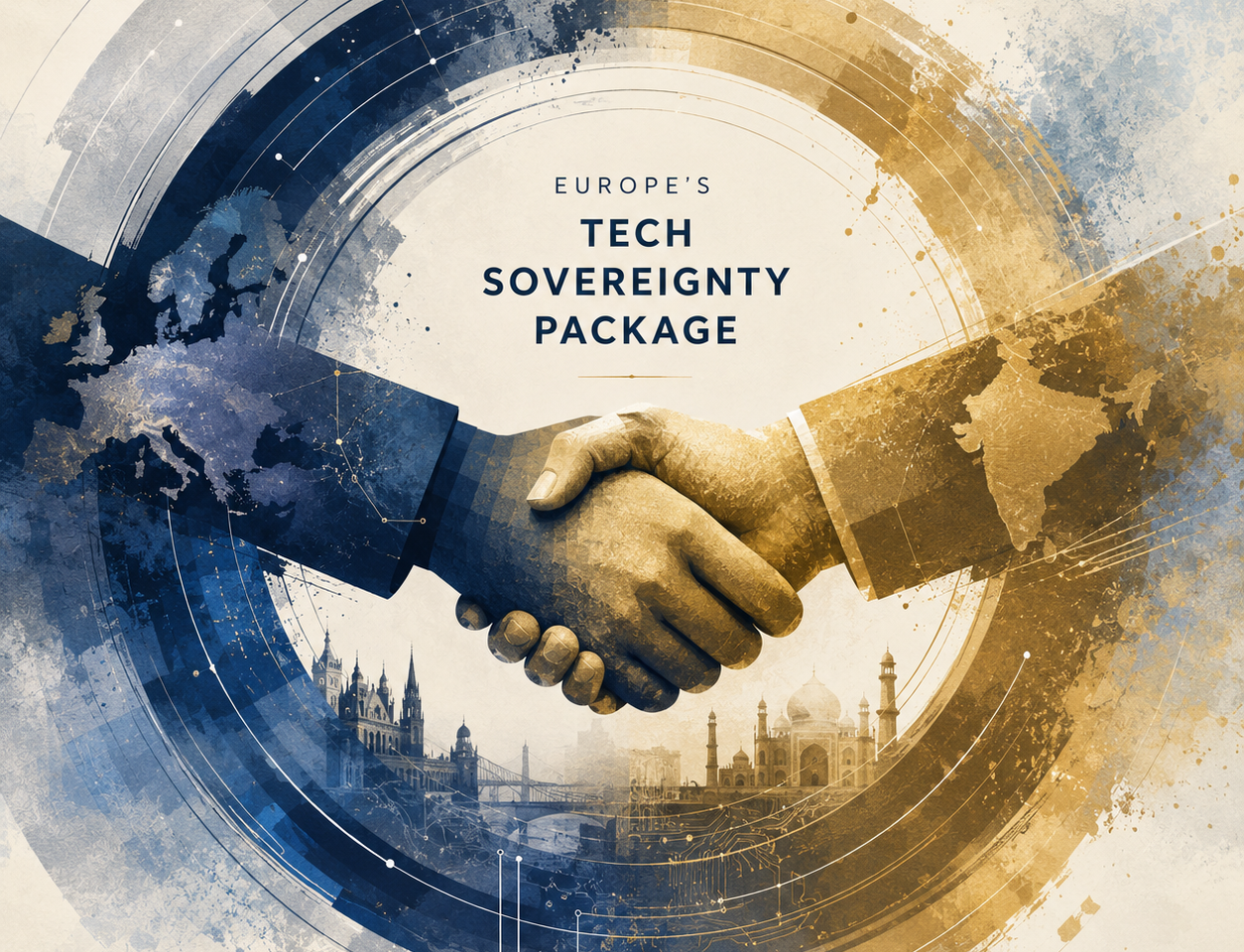
Why India’s role may grow as Europe pursues technological sovereignty
When Europe speaks about technological sovereignty, many observers immediately think about reducing dependence. Reducing dependence on foreign technologies. Reducing dependence on external supply chains. Reducing dependence on geopolitical rivals. Yet sovereignty does not necessarily imply isolation.
In practice, Europe’s emerging technology strategy may require more international cooperation, not less. That is particularly true in Asia.
As the European Union launches its new Tech Sovereignty Package, attention is naturally focused on semiconductors, cloud infrastructure and artificial intelligence. But beneath these policy discussions lies another question. Who will Europe choose as its long-term technology partners? Increasingly, India appears to be part of the answer.
Read MoreSociety & Culture

The Education Race: Who Will Own the Talent Economy?
Saturday, April 11, 2026
A new global competition is emerging — not for capital, but for talent. As India, China and Singapore build distinct systems to deploy human capital, the future of economic power will be defined by which model proves most resilient.

The Talent Hub: How Singapore Engineers a Global Knowledge Economy
Saturday, April 4, 2026
Singapore has built a different model of technological power — not through scale, but precision. By treating talent as policy and the state as a platform, it has engineered a global knowledge hub designed for connectivity, control and long-term strategic advantage.

The Silent Joke — Who Decides What Feels Awkward?
Thursday, April 2, 2026
Awkwardness is not accidental but socially constructed, shaped by power, hierarchy and expectation. The Silent Joke explores how embarrassment reveals the invisible rules of public life — and why some can break them, while others quietly pay the price.

Population Is No Longer Destiny in Asia
Thursday, April 2, 2026
Population is no longer a reliable predictor of power in Asia. As demographic paths diverge, outcomes depend on how effectively countries convert scale into productivity, exposing a widening gap between demographic potential and economic performance.
