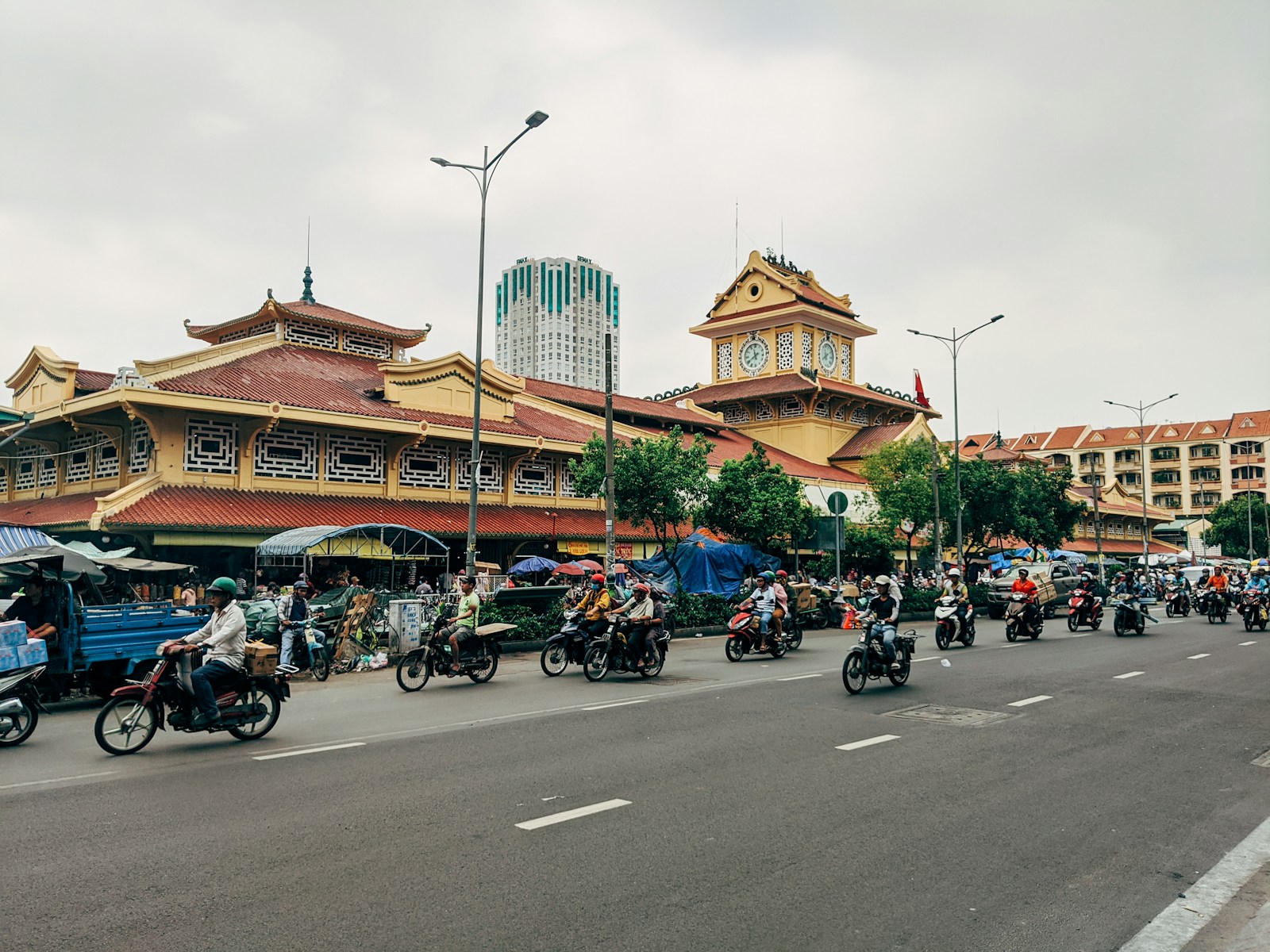
In seconds, AI decides loans for street vendors in Ho Chi Minh City and Manila. Invisible algorithms unlock opportunity but shift power to distant servers. In Southeast Asia, financial inclusion flows with both promise and risk.
Latest Articles
Stay up to date with the latest reporting, analysis and commentary shaping Asia and the wider Indo-Pacific..

When networks become intelligent infrastructure, strategy can no longer follow technology. The Deep Reflection Report explores how AI-native telecom networks are redefining power, governance and long-term decision-making — before the transition to 6G becomes irreversible.
The transition from 5G to 6G is no longer a technical discussion. It is reshaping governance, sovereignty, investment horizons and organizational trust.

For decades, Europe built its digital world from the ground up. Fibre followed roads. Mobile masts followed population density. Connectivity was something engineers could point at — tangible, terrestrial and geographically bounded. When networks failed, the causes were usually visible: a storm, a cut cable, a damaged site. That mental model is no longer sufficient.

We live in a time where technological innovation never pauses. Artificial Intelligence is growing exponentially; algorithms predict our behavior and smart systems make decisions once reserved for humans. Yet… life feels faster but poorer. We have more resources than ever, yet less time, less rest and less meaning. Society seems increasingly individualistic; hidden poverty is on the rise—not only financially but socially and emotionally.

In Asia, the race for faster AI, smarter chips and next-generation networks is relentless. Governments and companies alike are pushing for more computational power, faster edge devices and instant connectivity. Yet, in the scramble for speed, one question is rarely asked: are we fully utilizing what we already have? Sometimes, the smartest move is not to accelerate—but to pause, reflect and realign.
