Thursday, June 11, 2026
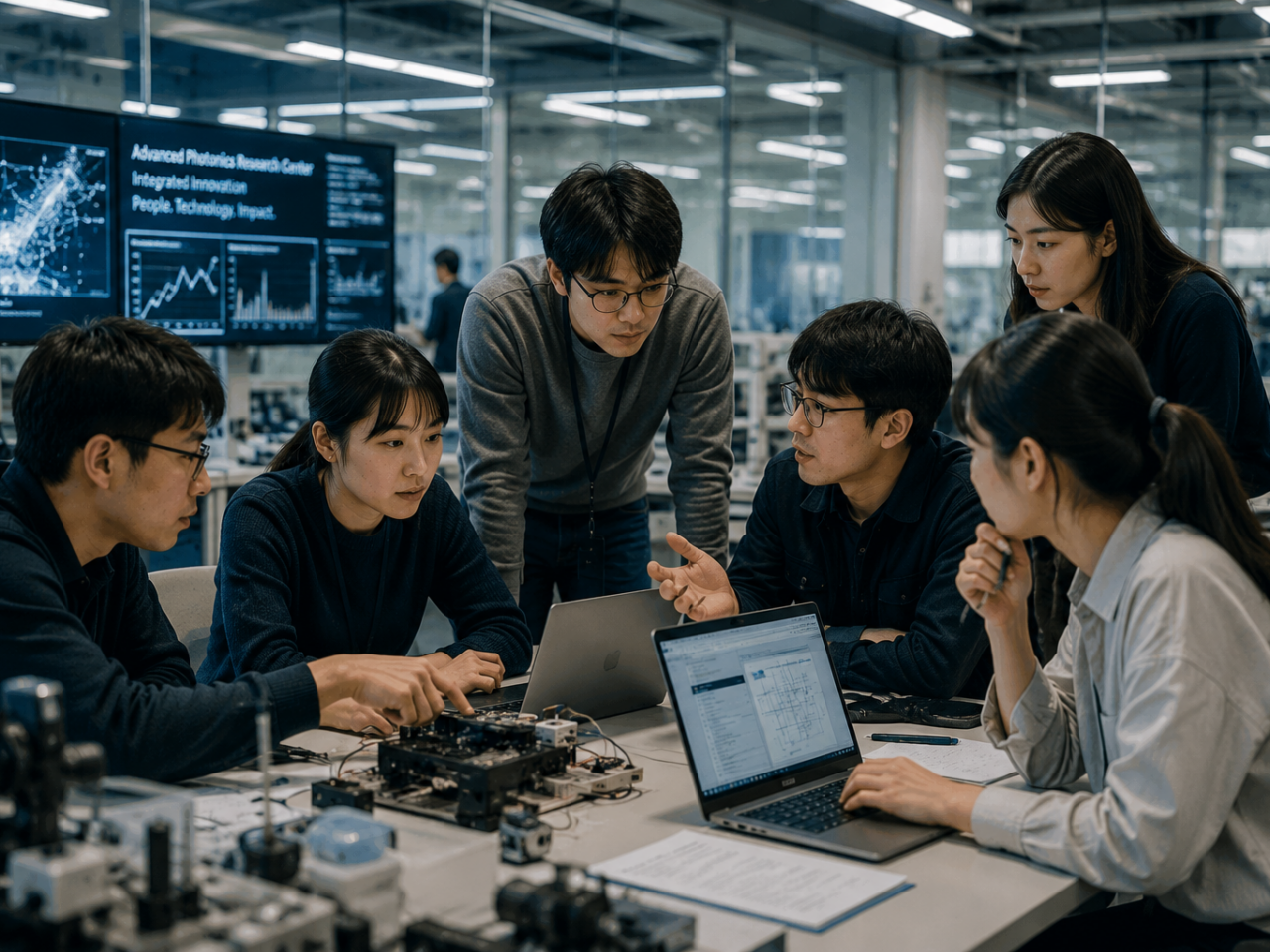
Across Asia, universities are increasingly becoming part of coordinated talent systems designed to support innovation, industrial capacity and national competitiveness. Education is evolving from a social institution into strategic infrastructure for generating the capabilities that shape future economic power.
Read More
Sunday, January 18, 2026

For decades, Europe built its digital world from the ground up. Fibre followed roads. Mobile masts followed population density. Connectivity was something engineers could point at — tangible, terrestrial and geographically bounded. When networks failed, the causes were usually visible: a storm, a cut cable, a damaged site. That mental model is no longer sufficient.
Read More
Sunday, January 4, 2026

A short but pointed intervention by Rafael A. Junquera, Co-Founder and Editorial Director of TeleSemana.com, is drawing attention inside the global telecom industry. Writing in Spanish, Junquera frames the current evolution of 5G not as a technology upgrade, but as a strategic fork in the road that could shape power relations in telecommunications for decades.
Read More
Sunday, January 4, 2026

For years, global markets were dominated by narratives of American exceptionalism and the AI-driven rally on Wall Street. In 2025, however, the story changed. Asian markets broadly outperformed their Western counterparts, signaling a historic turning point. From sustained gains across equities to strategic shifts in investor sentiment, the region emerged as a central engine of global financial growth. For Altair Media Asia, understanding the forces behind this shift is crucial as we look toward 2026.
Read More
Saturday, January 3, 2026

Indonesia and Vietnam are often described as “emerging markets”, a label that suggests a linear journey toward a known destination. It is an increasingly inadequate frame. These economies are not moving toward an established end state; they are entering a phase where scale itself becomes the dominant variable. Growth is no longer the question. Absorption is.
Read More
Saturday, January 3, 2026

Taiwan occupies a paradoxical position in the global order. It is one of the most discussed places on earth, yet its true significance is rarely articulated on its own terms. Headlines focus on risk, deterrence and geopolitical tension. What they often miss is the quieter reality beneath the noise. Taiwan matters not because of what it claims, but because of what it does.
Read More
Saturday, January 3, 2026

For much of the past decade, the global technology debate has been framed around a misleading opposition: innovation versus regulation. In the United States, platforms scaled first and negotiated governance later. In China, innovation advanced within systems of state command. Europe, meanwhile, has often tried to civilise markets only after they had already reshaped society. Singapore never fully accepted this framing.
Read More
Friday, January 2, 2026

For decades, technological leadership was measured in market capitalization, platform dominance and consumer adoption curves. Silicon Valley defined the global narrative with privately owned platforms built for scale, speed and extraction. China followed a different path, constructing vertically integrated digital ecosystems tightly aligned with state control and strategic surveillance.
Read More
Wednesday, December 31, 2025

South Korea occupies a distinctive position in Asia’s technology landscape. Neither a Silicon Valley–style free market nor a fully state-directed system, the country has refined a hybrid model in which government capacity, industrial champions and digital platforms reinforce one another. At the heart of this model lies a conviction that technology infrastructure is not merely an economic sector, but a core instrument of national competitiveness.
Read More
Tuesday, December 30, 2025

As Indonesia approaches the centenary of its independence in 2045, the nation finds itself at a pivotal crossroads. The Golden Indonesia 2045 Vision (Visi Indonesia Emas 2045), launched by President Joko Widodo in 2019, charts an ambitious course to transform the country into one of the world’s top five economies—sovereign, technologically advanced, equitable and sustainable.
Read More
