
Japan does not lack capital. Its challenge is making that capital move. Through Hiromi Yamaji and the Tokyo Stock Exchange, Altair Media examines how governance reform, higher interest rates and changing corporate behaviour are reshaping the way Japanese capital is allocated.
The New Architecture of Asian Capital
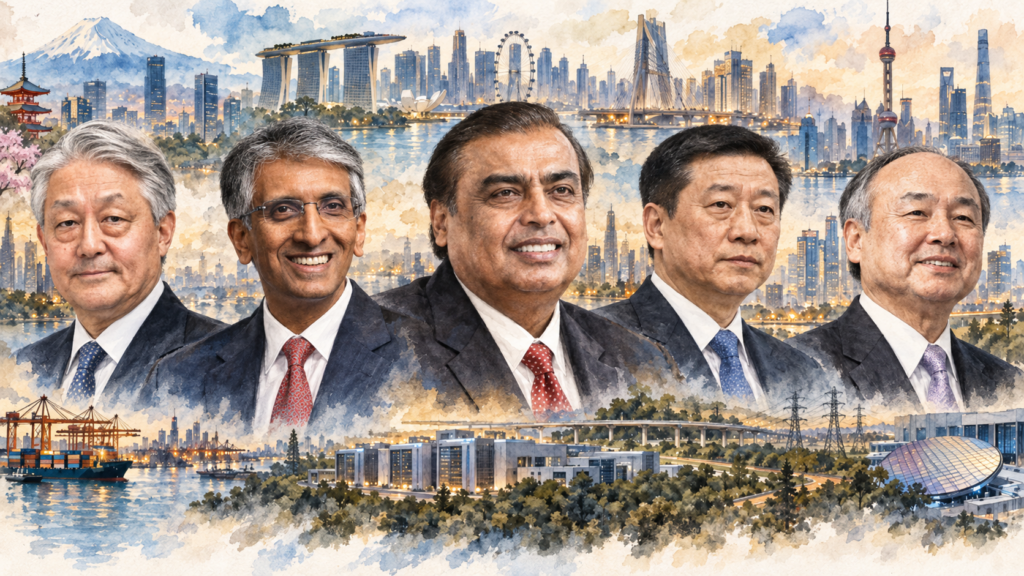
How states, markets and industrial powers decide what gets built
Asia does not lack capital. Its challenge is deciding where that capital should go. From Japan’s corporate savings and Singapore’s sovereign wealth to India’s conglomerates and China’s state-directed finance, different systems are competing to turn wealth into productive capacity.
Asia’s next growth cycle will be shaped not only by how much capital it has, but by who directs it.
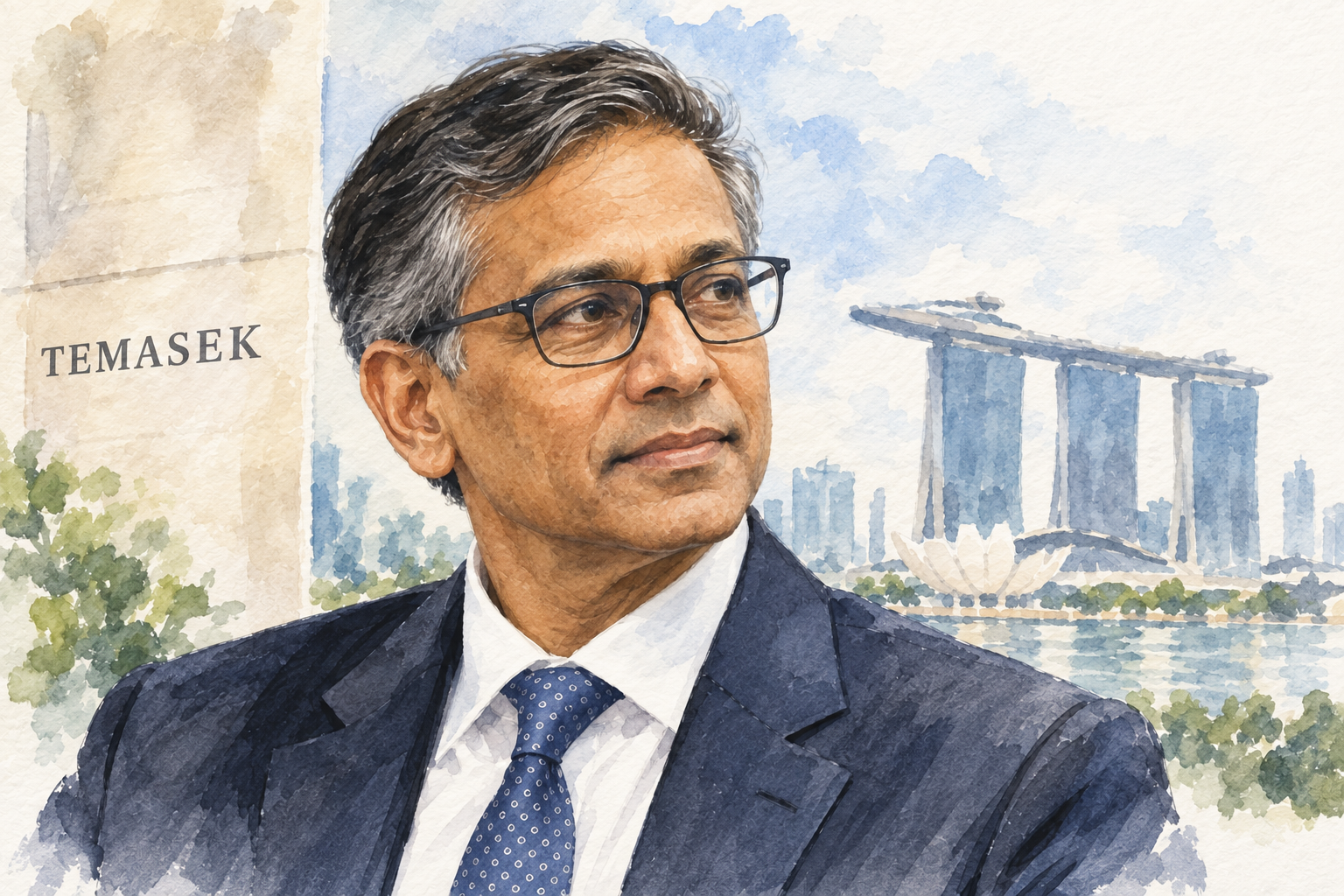
Temasek is state-owned, but it is not a ministry. Through Dilhan Pillay, Altair Media examines how Singapore combines public ownership, commercial discipline and patient capital to invest across AI, infrastructure, energy and long-term economic transitions.

Mukesh Ambani’s real power lies not only in the size of Reliance, but in how he uses its balance sheet. Profits from mature businesses can finance new industries long before public markets are ready to price them.
Credit
Illustration: Altair Media / OpenAI
Caption
Hiromi Yamaji, Dilhan Pillay, Mukesh Ambani, Wu Qing and Masayoshi Son represent five different ways of directing capital in Asia — through markets, sovereign finance, conglomerates, state guidance and long-term strategic investment.
