
European companies and Chinese companies often compete in the same markets. Yet they frequently operate within very different economic architectures. Understanding those differences helps explain why debates about subsidies, trade and industrial policy have become increasingly central to relations between Europe and China.
Industry
Asia’s global role, with manufacturing systems and production networks shaping supply chains worldwide.

Why does China invest hundreds of billions in semiconductors, artificial intelligence, batteries and high-speed rail? The answer lies in how Beijing views economic development. Many technologies are not seen as commercial sectors alone, but as strategic infrastructure that underpins future national power.

China is often described as communist, capitalist or something in between. Yet modern China operates through a distinctive hybrid system in which markets drive growth and innovation while the state retains the authority to guide economic development and long-term national priorities.

Europe’s technology strategy is not about isolation. It is about resilience through partnership. As Europe builds its capabilities in semiconductors, cloud infrastructure and artificial intelligence, cooperation with India on talent, digital infrastructure and innovation could help shape the next era of global technology.

For decades, China’s growth model promised a broadly understandable path to success: education, employment, home ownership and upward mobility. Today, many young Chinese continue to pursue those goals, but with growing uncertainty about where ambition ultimately leads. This essay explores the quieter psychological shifts emerging beneath China’s slowing economic momentum.
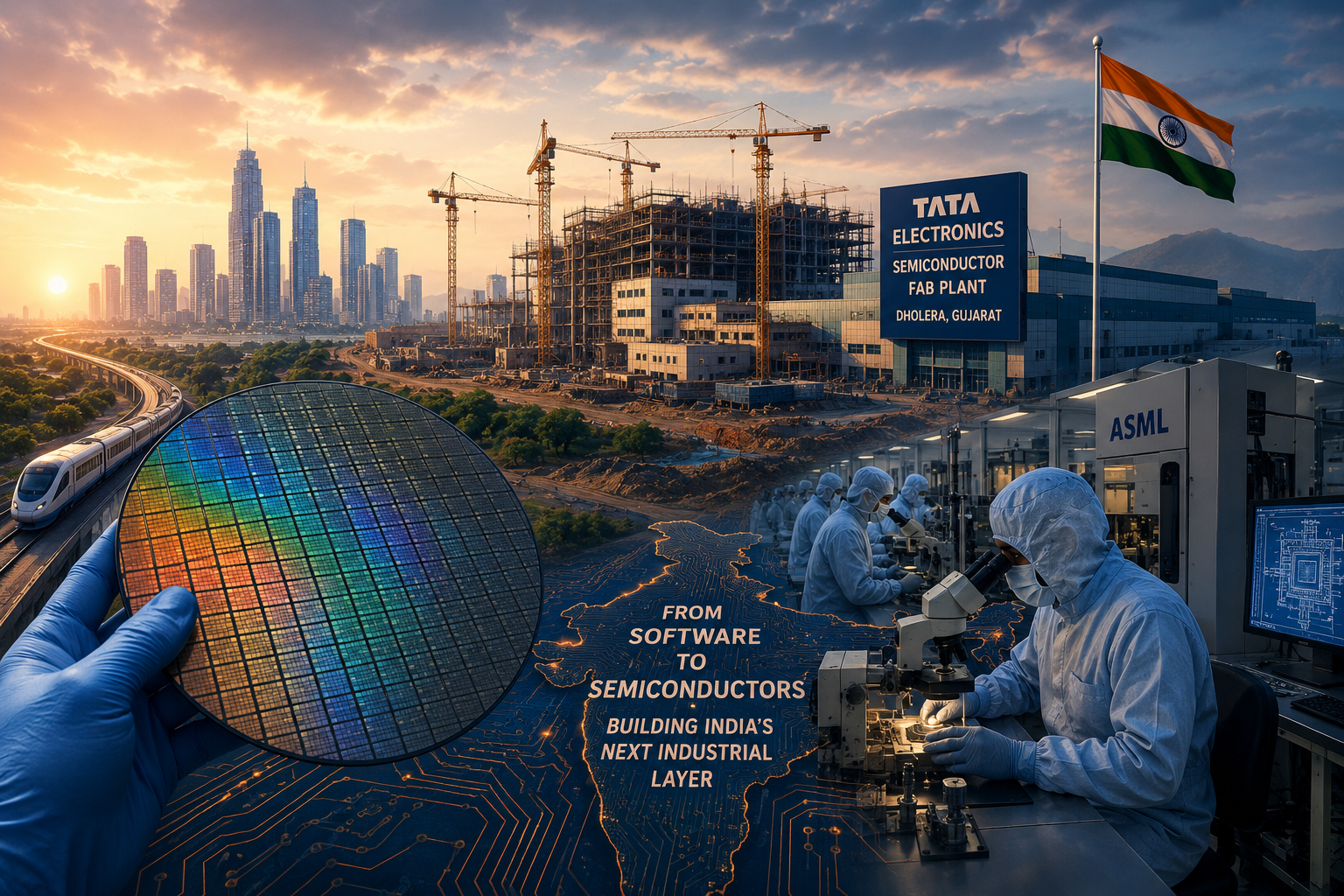
India’s semiconductor ambitions are often described as a technology story. Increasingly, they look like something deeper: a shift from software to industrial capability, from talent to ecosystems, and from participation in global supply chains to becoming indispensable within them.

As artificial intelligence accelerates global demand for data, Kioxia quietly powers the memory layer beneath the digital economy. From enterprise SSDs to advanced NAND flash, the former Toshiba Memory remains a critical but often overlooked pillar of modern computing infrastructure.

ASML and Tata Electronics have signed an agreement supporting India’s semiconductor ambitions. As India aims to build at least ten advanced chip facilities, the country is shifting from a software-focused technology economy toward strategic industrial manufacturing capacity.

As semiconductor scaling reaches its limits, photonics offers a new path forward. By integrating light into chips, the industry faces a shift from design challenges to manufacturing complexity—where materials, precision and scalability define the next phase of innovation.

From hard drives to electric vehicles, Nidec powers the movement behind the digital economy. Its precision motors and evolving role in cooling and electrification make it a silent but essential force shaping modern industry and global infrastructure.

ASML’s shift toward Asia reveals a deeper transformation: innovation may remain rooted in Europe, but scale now follows demand. As Brainport faces its next phase, the question is no longer where technology is built, but where it truly grows.

As chip innovation shifts beyond transistor scaling, advanced packaging has become essential to performance. ASE Technology operates at this critical layer, transforming silicon into functional systems and quietly enabling the next generation of AI, computing and global digital infrastructure.
