When a Robot Becomes Family
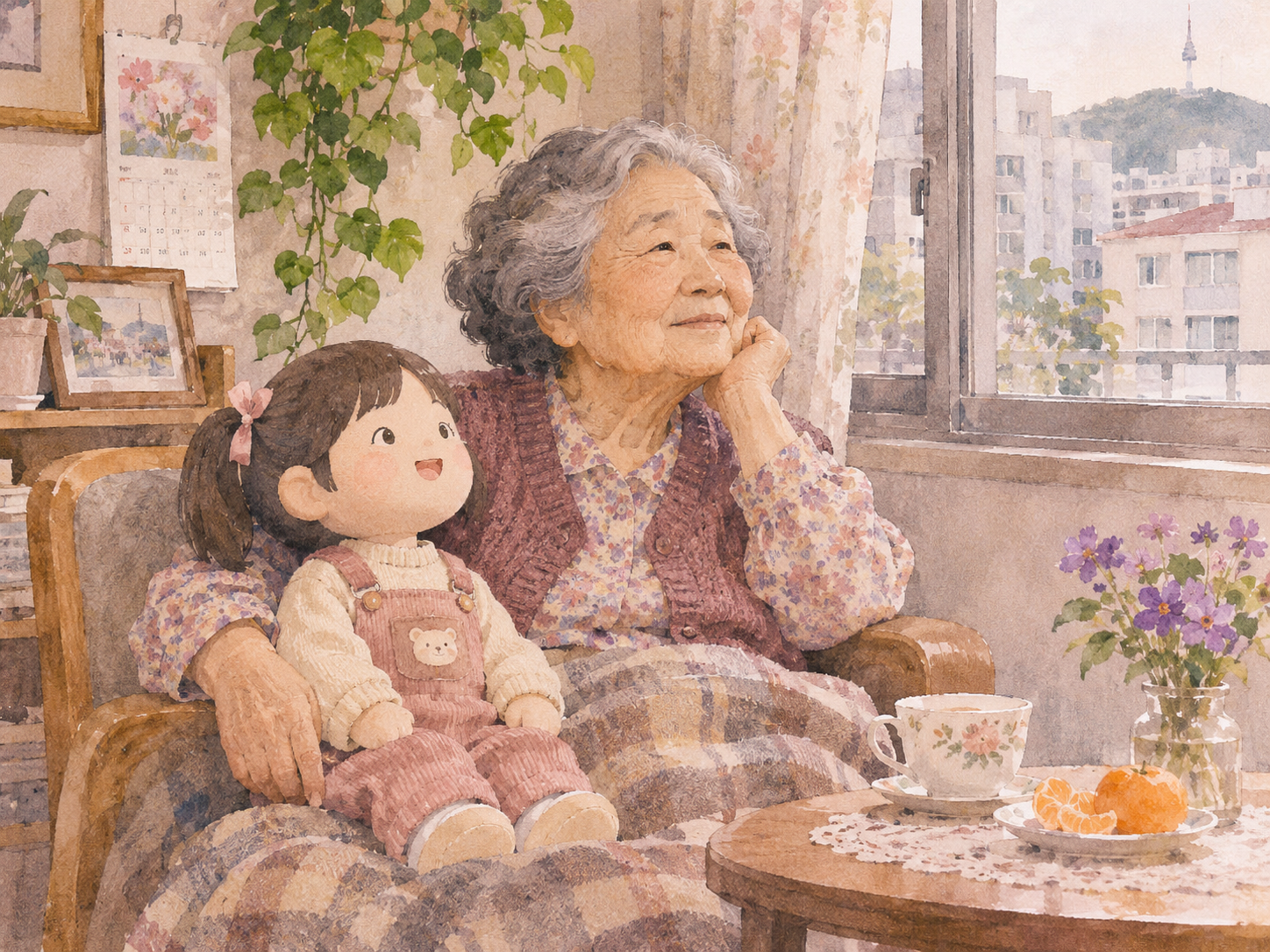
In ageing South Korea, an AI-powered doll brings warmth to empty homes — and raises a quiet question about what human care truly means
For many older people, one of the hardest aspects of ageing is not declining health, but the silence of an empty home. In South Korea, thousands of elderly residents are finding companionship in an unexpected form: a small, artificially intelligent doll resembling a grandchild.
Bang Chun-ja is 78 and lives alone in Yongin, south of Seoul. Following major back surgery, she experienced depression and social isolation. Today, she shares her home with Hyodol, an AI-powered companion provided through a local welfare programme.
The doll greets her when she returns home, sings songs, reminds her to take medication and encourages her to eat regularly. Speaking to AFP in June 2026, Bang described how the robot had become a source of comfort in her daily life.
She knows it is a machine. Yet the comfort she experiences is real.
The need to be needed
Hyodol was developed by a South Korean technology company seeking to address the growing isolation of older citizens. By June 2026, approximately 14,500 devices were reportedly in use across the country.
Its deliberately childlike appearance serves a purpose. Rather than simply providing practical assistance, the doll invites its owner to participate in a relationship, encouraging conversation, affection and attention.
For people who have spent decades raising children, supporting families and caring for others, growing older can bring an unfamiliar experience: no longer feeling needed. Hyodol attempts to restore part of that experience by giving older people not only someone to talk to, but also something to care for.
The development comes against a troubling demographic backdrop. In 2024, South Korea recorded approximately 3,920 so-called lonely deaths — people dying in social isolation. As traditional family structures change and the population ages, technology is increasingly becoming part of the country’s response to a profoundly human problem.
Companionship or substitution?
Qualitative research published in AI & Society in 2026 highlights both the benefits and complexities of relationships with companion robots. Users reported emotional support and a renewed sense of purpose, while researchers also identified risks associated with emotional dependence and frustration.
These findings raise a broader question. If artificial intelligence becomes increasingly capable of providing companionship, might families and care institutions gradually feel less urgency to offer it themselves?
A robot can respond to expressions of sadness, provide reassurance and bring structure to everyday life. For someone living alone, these interactions may be genuinely meaningful. But they are not necessarily a substitute for the relationships that connect people to their families and communities.
South Korea is exploring a future that many other ageing societies, including those in Europe, may soon encounter. Perhaps the most important measure of these technologies will not be how convincingly they imitate human relationships, but whether they help preserve them.
Because growing old with dignity should mean more than having something to talk to.
It should also mean remaining someone worth visiting.
Sources & Editorial Note
The personal account of Bang Chun-ja is based on reporting by AFP, In ageing South Korea, AI dolls care for the elderly, 11 June 2026, rather than an original Altair Media interview.
Research insights and broader context are drawn from Lee, Sohn & Yoon, Dual impacts of anthropomorphic relationships with companion robots at home for older adults, AI & Society (2026), and Shin Ji-hye, Can AI robots replace family?, The Korea Herald, 15 March 2026, updated 16 March 2026.
Caption
In South Korea, AI-powered companion dolls are becoming part of everyday life for older people, offering comfort, companionship and a renewed sense of purpose. Their presence raises profound questions about the future of human care.
Image credit
Altair Media | The Human Dimension — AI-generated editorial watercolour illustration, 2026. Artistic interpretation, not a portrait of Bang Chun-ja.
Series identity
The Human Dimension — Exploring the lives behind a changing world.
