Japan Is Opening Its Labor Market — Carefully
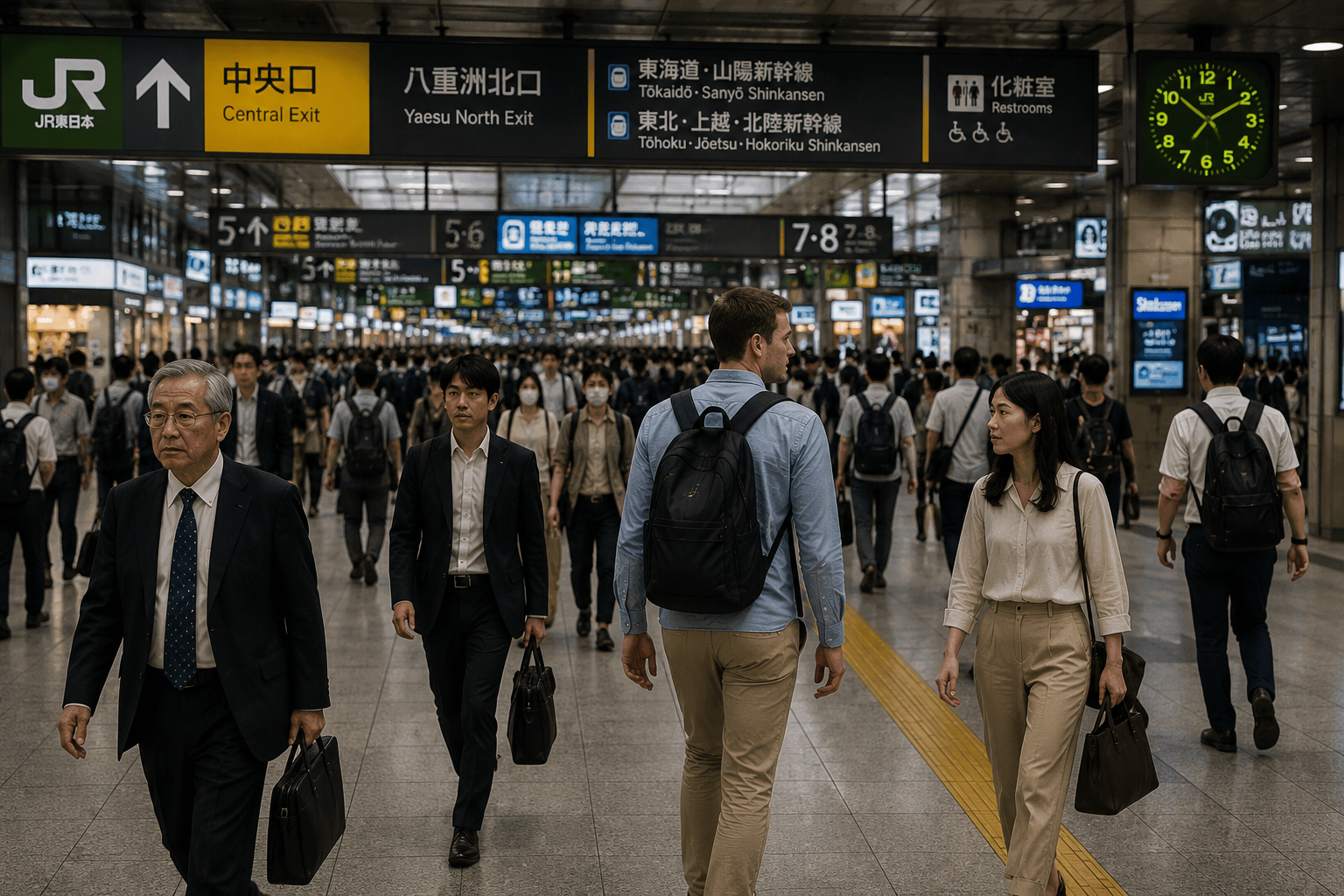
Policy changes suggest a controlled shift rather than a structural migration pivot
🔶 Signal
🔹 What changed
For decades, Japan was regarded as one of the world’s most migration-resistant advanced economies.
Population decline was acknowledged. Labor shortages were visible. Yet policymakers remained cautious about large-scale immigration as a solution. That position is beginning to evolve.
Recent policy adjustments have expanded pathways for foreign workers in sectors facing acute labor shortages, including healthcare, construction and services. The changes are significant by Japanese standards. But they should not be mistaken for a fundamental policy reversal.
Japan is opening its labor market. It is not necessarily opening its society.
🔹 What’s misunderstood
Outside observers often interpret these developments through a familiar lens: More foreign workers equals more immigration.
Japan’s approach is more nuanced. The objective is not population growth. Nor is it a transition toward a migration-based economic model.
Instead, policymakers appear focused on addressing specific labor shortages while maintaining broader social and political continuity. The distinction matters.
Japan is not trying to become a traditional immigration country. It is attempting to manage demographic decline without becoming one.
🔹 Why it matters
This challenge extends beyond Japan. Across Asia, aging societies are confronting a similar dilemma. Labor shortages are intensifying, while public attitudes toward large-scale migration remain mixed.
As a result, many governments are searching for alternatives that fall between two extremes:
- completely closed labor markets
- unrestricted labor mobility
Japan increasingly represents a third model. Selective access. Targeted sectors. Managed integration. The emphasis is not on maximizing inflows, but on minimizing disruption.
🔹 Beneath the surface
What makes Japan particularly interesting is that migration is only one part of a broader, more calculated response.
The country does not view foreign labor as a demographic replacement, but as a flexible buffer. This allows policymakers to protect social continuity while addressing acute operational shortages.
At the same time, Japan continues to push the boundaries of automation, robotics and workforce participation among older citizens.
Migration therefore functions less as a permanent structural pivot and more as a supplementary mechanism within a larger adaptation strategy.
Japan is not attempting to reverse demographic decline. It is engineering a way to live with it.
🔹 The signal
Japan’s labor market is becoming more open. But its underlying philosophy remains remarkably consistent.
The country is moving toward a model of selective access, targeted sectors and carefully managed integration designed to sustain economic capacity while minimizing social friction.
🔹 Closing
In much of the world, demographic decline is still framed as a problem to be solved.
Japan increasingly treats it as a condition to be managed. Its response is not built on a single solution, but on a careful balance between robots, retirees and migrants.
That balance may offer an early glimpse of how other aging societies will adapt in the decades ahead.
Part of The Human Layer of Power in Asia — a series examining how demographic systems translate into economic and geopolitical capacity.
Credit:
Image generated by AI (DALL·E), 2026.
Caption:
A busy Tokyo transit hub reflects a society adapting to demographic change. As labor shortages intensify, Japan is expanding access to foreign workers while balancing automation, workforce participation and social continuity.
